
Table of Contents
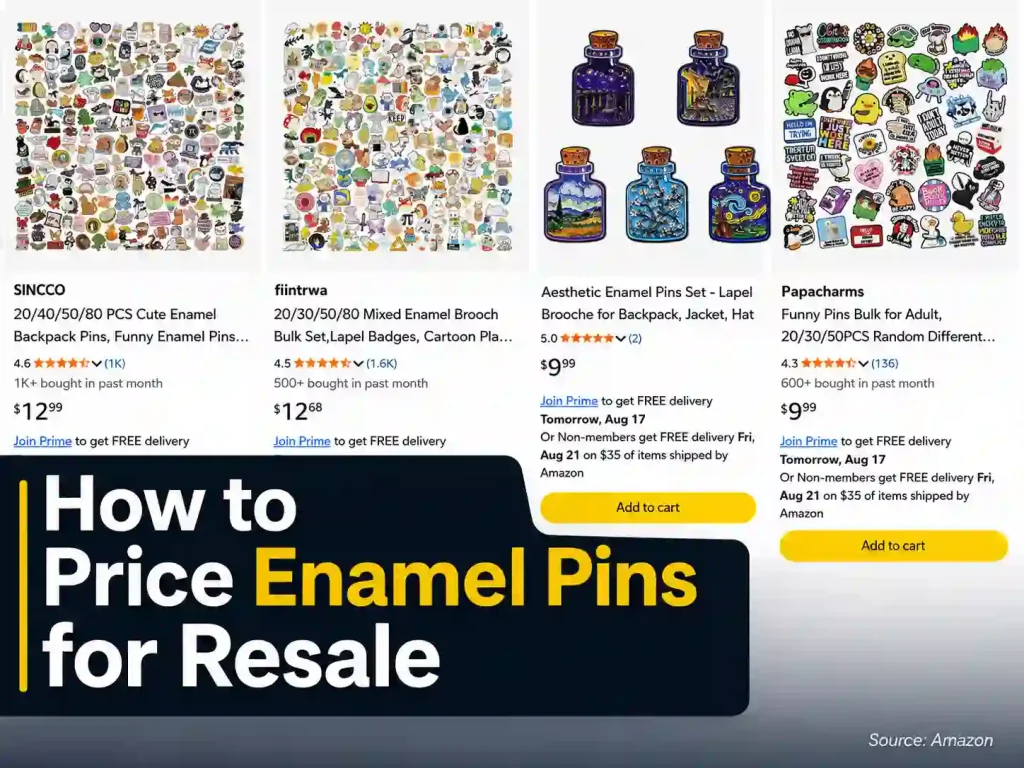
If you’re an illustrator, independent brand, or creator planning to turn your artwork into enamel pins, setting the right price can take some thought.
You need to cover your production costs and selling expenses while still leaving room for profit.
So what should you actually charge?
In this guide, VeperPins breaks down the main costs to consider and shows you a practical way to set your pricing.
Calculate Your True Cost Per Pin First
Before deciding what to charge, you need to know what each sellable pin actually costs you.
The simplest way to do that is to divide the total cost of the order by the number of pins you can actually sell.
Landed cost per pin = (Production + setup/mold fees + shipping + packaging + duties) ÷ Sellable quantity
For example, say you order 100 enamel pins and spend $300 in total.
If all 100 are sellable:
$300 ÷ 100 = $3.00 per pin
If a few are used as samples or aren’t available for sale, calculate your cost using the actual number you plan to sell.
When you order from us, production-related costs are included clearly in your quote, making it easier to understand how much you’re putting into the batch. Larger quantities also tend to bring the cost per pin down, giving you more room for both retail and wholesale margins.
How Much Should You Sell an Enamel Pin For?
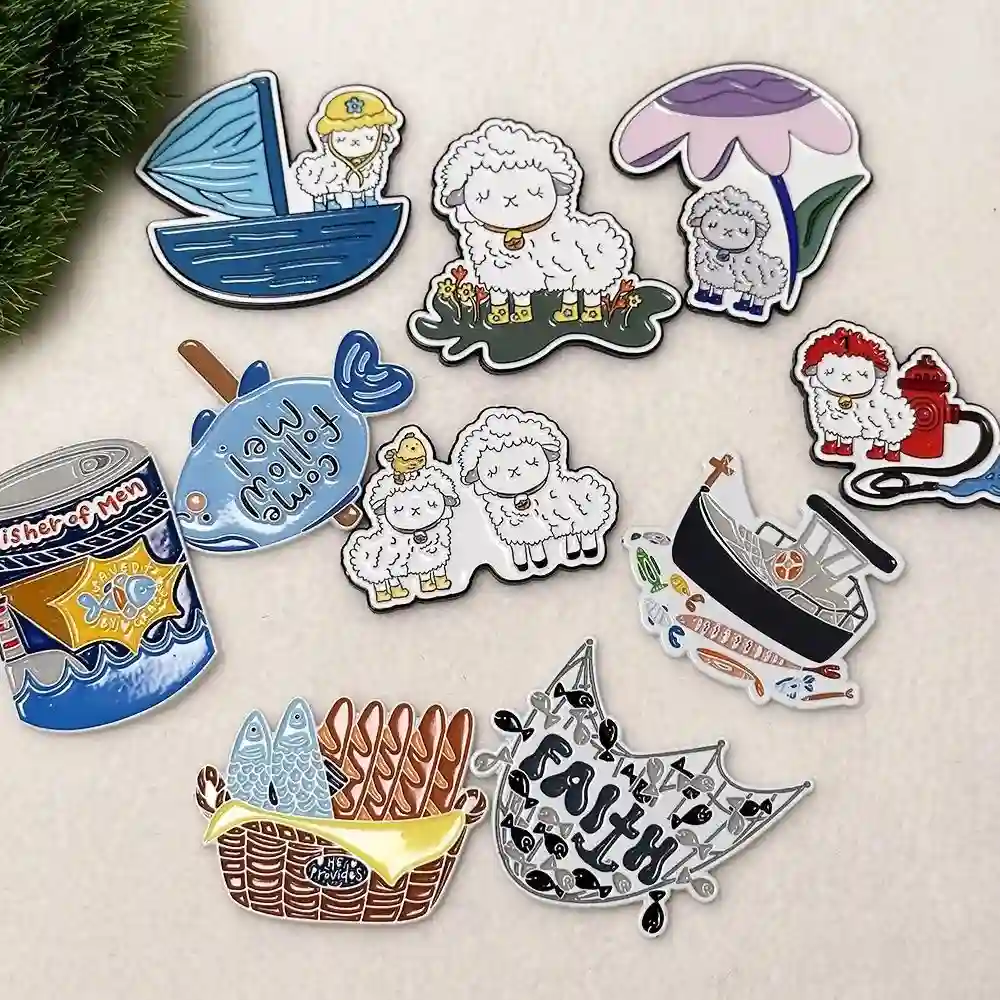
There’s no single price that works for every seller, and simply copying a competitor’s price usually isn’t a good idea.
One brand may get most of its customers through Instagram or organic search. Another may spend heavily on paid ads. Some sellers also have much higher website, software, or fulfillment costs.
Your selling price needs to work with your numbers.
Start With Customer Acquisition Cost
If you’re paying to bring customers to your store, that expense has to be part of the equation.
Customers coming from Instagram, TikTok, SEO, repeat purchases, or referrals may not have a direct advertising cost. But if you’re running Facebook, Instagram, or Google Ads, you need to know what each order costs to acquire.
Paid acquisition cost per order = Ad spend ÷ Orders attributed to ads
For example, if you spend $600 on ads and generate 20 orders:
$600 ÷ 20 = $30 per order
If your pin costs $3 to make and sells for $12, a customer buying just one pin isn’t going to cover a $30 acquisition cost.
That’s why sellers who rely on paid advertising need to pay attention to both average order value and customer acquisition cost, not just the profit on one pin.
Add Marketplace and Payment Fees
Where you sell matters too.
On Etsy, for example, U.S. sellers currently pay a $0.20 listing fee, a 6.5% transaction fee, plus payment processing fees.
Shopify works differently. On the U.S. Basic plan, online card rates start at 2.9% + $0.30 per transaction, and you also have the monthly subscription cost.
If you sell a pin for $12, the 2.9% + $0.30 card fee alone comes to roughly $0.65.
So don’t look at profit as simply:
Selling price − pin cost
You also need room for marketplace fees, payment fees, and other selling expenses.
Fixed charges such as $0.20 or $0.30 matter even more on lower-priced orders.
Decide How Much Profit You Want to Make
Next, think about what matters more at your current stage: sales volume or profit per order.
If you’re just getting started and want to build your first customer base and reviews, you may choose a more accessible price.
For a pin with a landed cost of around $3, you might test a retail price around $8–$10.
As your audience grows, repeat customers increase, or your designs become more established, you may be able to move into the $12–$15 range or higher.
That range is also common among independent enamel pin brands.
For example, many 1.25-inch hard enamel pins from Strike Gently are priced around $9.99, while The Gray Muse sells many standard designs around $11–$14, with more detailed interactive pins reaching roughly $16–$19.
Lower pricing can be useful when you’re testing the market, but it shouldn’t leave you selling at a loss. At a minimum, your price needs to cover your product cost, selling fees, and customer acquisition costs.
Enamel Pin Selling Fees by Platform
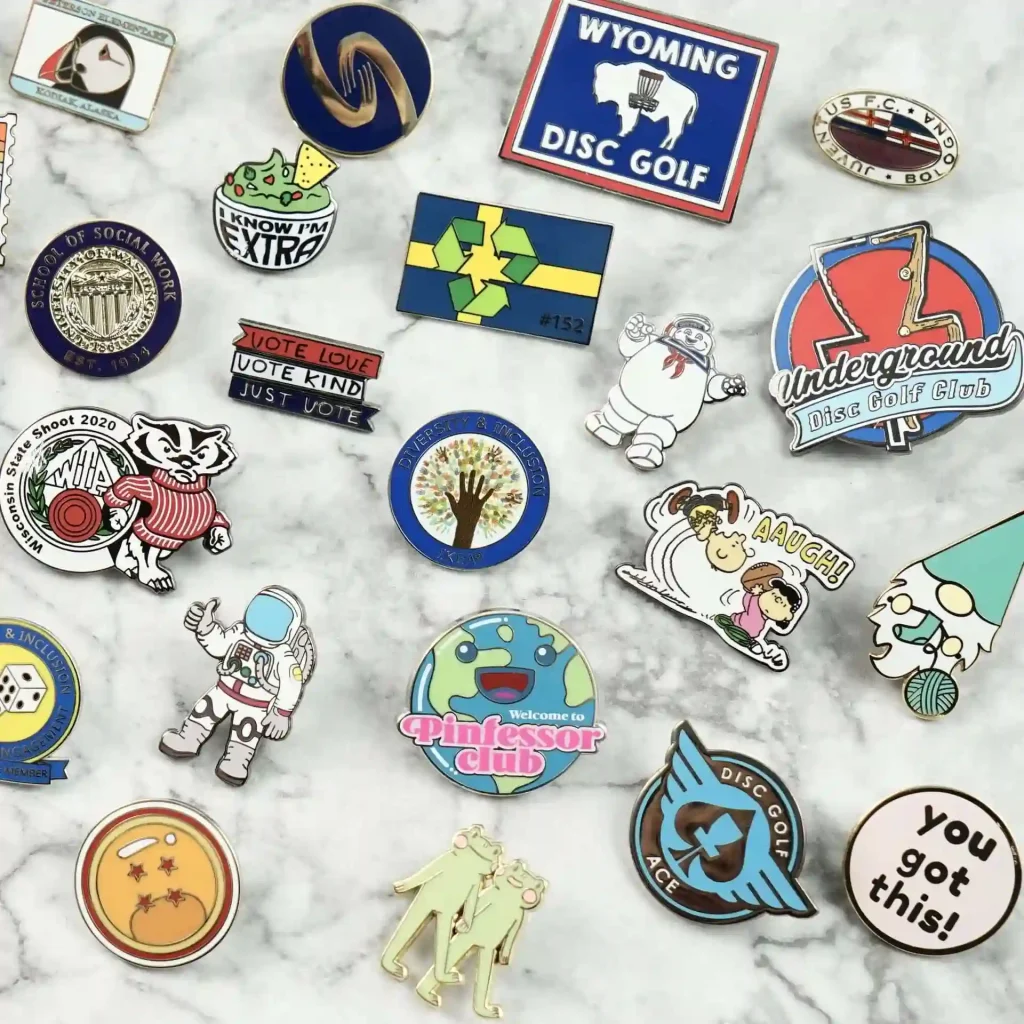
Here are some of the common platforms used to sell enamel pins:
| Platform | Typical Fees for U.S. Sellers | Approx. Fees on a $12 Order |
|---|---|---|
| Etsy | $0.20 listing fee + 6.5% transaction fee + payment processing | About $1.59 |
| Shopify | Online card rates start at 2.9% + $0.30, plus monthly subscription | About $0.65 |
| Big Cartel | No platform transaction fee; Stripe typically charges 2.9% + $0.30 | About $0.65 |
| Amazon Handmade | 15% referral fee, with a $0.30 minimum | About $1.80 |
| eBay | Many categories are around 13.6% + $0.30–$0.40 per order; exact fees vary | About $2.03 |
| Faire | Marketplace orders may include commission, a $10 new-customer fee on the first order, and payment processing fees. Eligible Faire Direct orders can have 0% commission. | Usually calculated on wholesale orders |
Etsy, Amazon Handmade, and eBay generally take a larger percentage of each sale. Shopify and Big Cartel rely more heavily on payment processing fees and, depending on the plan, subscription costs.
If you sell wholesale through Faire, make sure its fees and commissions are built into your wholesale pricing as well.
How to Sell More of Your Enamel Pins
Pricing matters, but it’s only one part of selling enamel pins successfully.
Test New Designs Before Ordering Too Much
If you’re not sure whether a design will sell, Kickstarter or a simple pre-order campaign can help you test demand before committing to a larger production run.
That lets you collect real customer interest first and reduces the risk of sitting on too much inventory.
Build an Audience You Own
Instagram, TikTok, Discord, and email can all help you build a following around your work.
People don’t always buy enamel pins just because they need a pin. They often buy because they like the artist, character, story, or brand behind it.
Once you have an audience, new releases, limited editions, and themed collections are usually much easier to sell than products that depend entirely on marketplace traffic.
Create Limited Editions and Collections
Instead of selling every design as a standalone product forever, try limited runs, numbered editions, seasonal releases, or connected collections.
They give existing customers a reason to come back and see what’s new.
Use Bundles to Increase Order Value
Bundles are also a simple way to improve your margins.
For example:
1 pin: $12
3-pin bundle: $30–$32
The customer gets a small discount, while you increase the value of the order and make fixed payment or advertising costs easier to absorb.
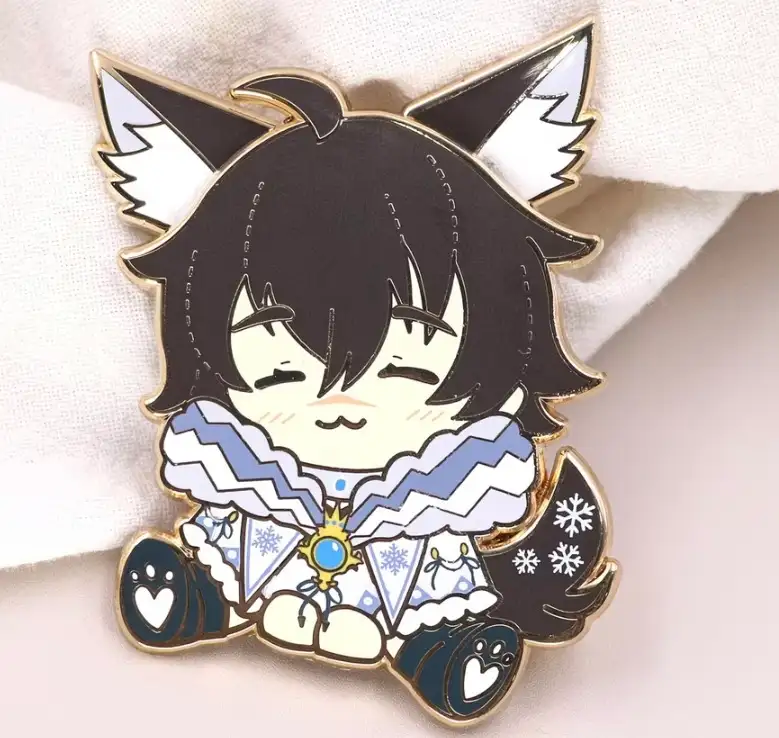
Work With VeperPins to Leave More Room for Profit
A good design gets attention, but the manufacturer behind it matters too.
Color accuracy, clean details, consistent quality, and production cost all affect how easy a pin is to sell—and how much profit is left when it does.
VeperPins works with artists, brands, and businesses that order enamel pins for resale. Our goal is simple: produce consistent pins at a cost that still leaves room for your margin.
If you already have a design, send it to us for a quote and see what pricing makes sense for your next batch.
Frequently Asked Questions
Should I include shipping in the price of my enamel pins?
It depends on how you sell them. If you offer free shipping, you’ll need to build at least part of that cost into your pricing. If customers pay shipping separately at checkout, you don’t need to add the full shipping cost to each pin.
Should I charge extra for backing cards and packaging?
Usually, you don’t need to list them as separate charges. Just make sure the cost of backing cards, bags, boxes, or other packaging is included when you work out what each pin costs you.
Should a 2-inch enamel pin cost more than a 1-inch pin?
Usually, yes. Larger pins often cost more to produce, but your retail price doesn’t have to increase at the same rate. The design, finish, packaging, and what your customers are willing to pay all matter too.
Can I still sell enamel pins with small defects?
Yes. Pins with minor scratches, small color issues, or other cosmetic flaws are often sold as B-grade pins at a lower price. Just make the condition clear on the product page so customers know what they’re buying.
When should I raise the price of an enamel pin?
If a design keeps selling out, production costs have gone up, or demand has grown, it may be worth testing a small price increase. You don’t have to make a big jump all at once.


