
Table of Contents
Custom challenge coins are used by the military, law enforcement agencies, companies, schools, clubs, and personal commemorative projects to represent honor, recognition, belonging, and appreciation.
Before starting a coin project, choosing the right size is important. Size affects artwork detail, text readability, hand feel, weight, and overall cost. If you are still learning the full process, you can also read our complete custom coins guide for a broader overview of design options, materials, plating, and ordering steps.
In this guide, we’ll walk you through common coin sizes, which designs work best for each size, estimated coin weight, thickness options, and how to measure custom-shaped coins before requesting a quote.
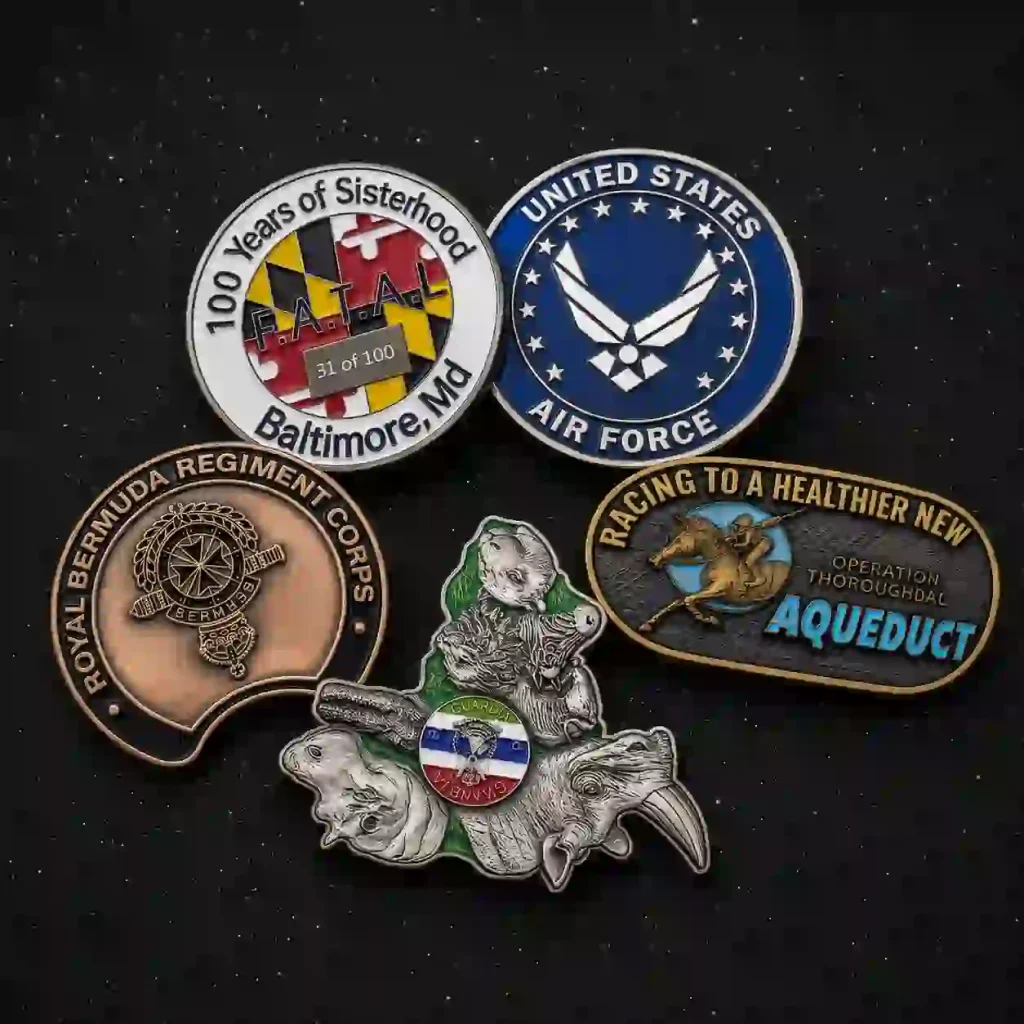
What Is the Standard Challenge Coin Size?
At VeperPins, creating custom challenge coins are available in many sizes, including 1.25 inches, 1.5 inches, 1.75 inches, 2 inches, 2.25 inches, 2.5 inches, 3 inches, and larger custom sizes.
That said, bigger does not always mean better, and smaller does not always mean more cost-effective. The right size should make your artwork clear, keep the text from feeling crowded, give the coin a solid hand feel, and still fit your budget and intended use.
In general, a simple logo, minimal text, or event giveaway coin can work well at 1.5 inches or 1.75 inches. If your design includes outer-ring text, badge artwork, double-sided details, or 3D relief, 2 inches or 2.25 inches is usually a better choice. For collector coins, display coins, bottle opener coins, or highly detailed artwork, 2.25 inches or larger may be more suitable.
You can compare the image below to see different sizes next to a U.S. quarter:
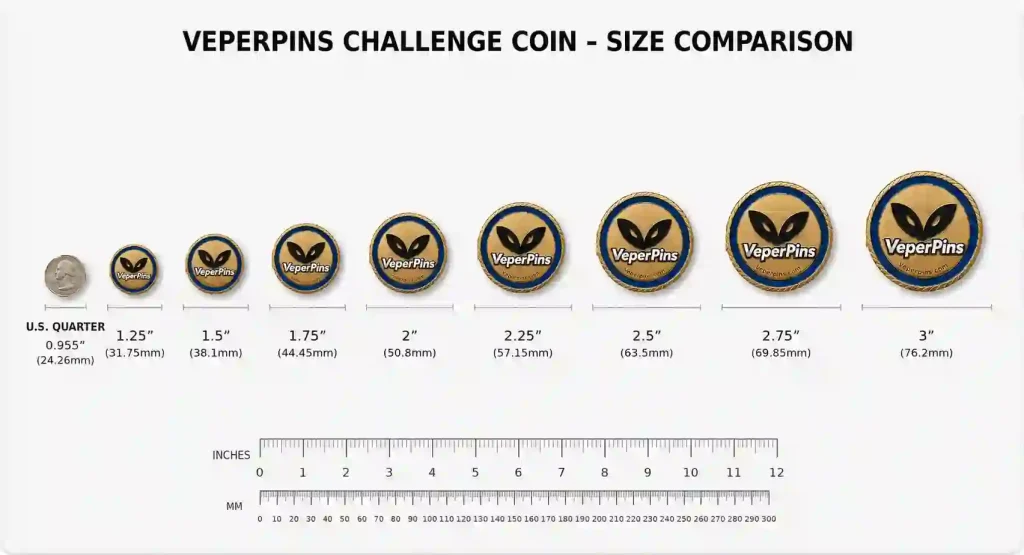
Challenge Coin Size Comparison
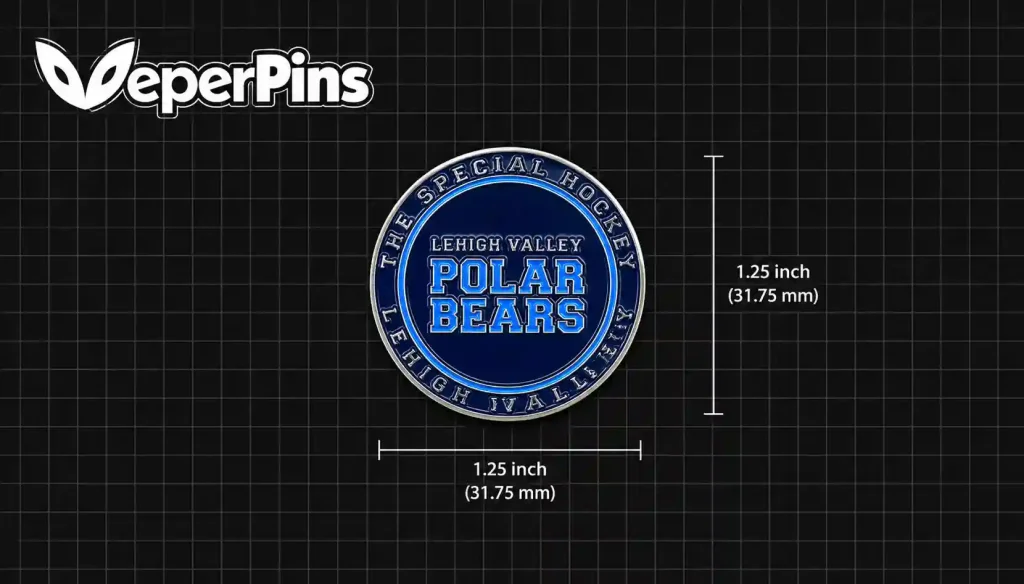
1.25-Inch Challenge Coins — 31.75 mm
A 1.25-inch challenge coin is very small and works best for simple, clean designs. It can be a good option for a company logo, simple icon, initials, date, or a short line of text.
This size is not recommended for designs with too much content. If the text is too long, the lines are too thin, or the artwork is too complex, the finished coin may look crowded and hard to read.
If you want a small, lightweight challenge coin that mainly highlights a logo, 1.25 inches can be considered. It is best for very simple artwork, not complex designs or large amounts of text.
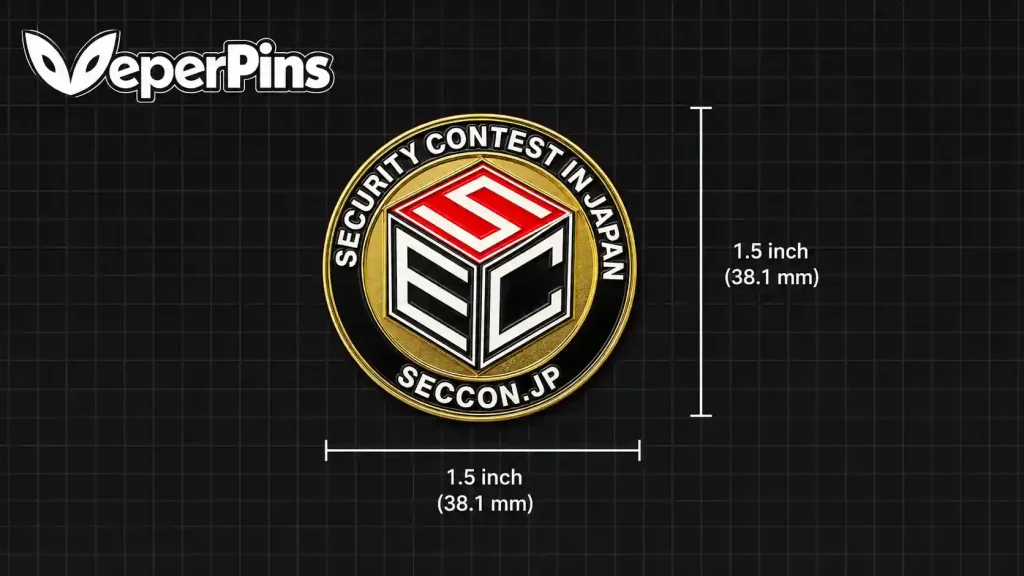
1.5-Inch Challenge Coins — 38.1 mm
A 1.5-inch coin is more practical than a 1.25-inch coin while still being lightweight and easy to carry. This size works well for event giveaways, membership coins, brand promotion coins, shop gifts, or bulk projects with a clear budget.
For best results, keep the design simple. A main logo, basic icon, or short text usually works best. If you need long outer-ring text, double-sided content, or a detailed badge design, 1.5 inches may feel limited.
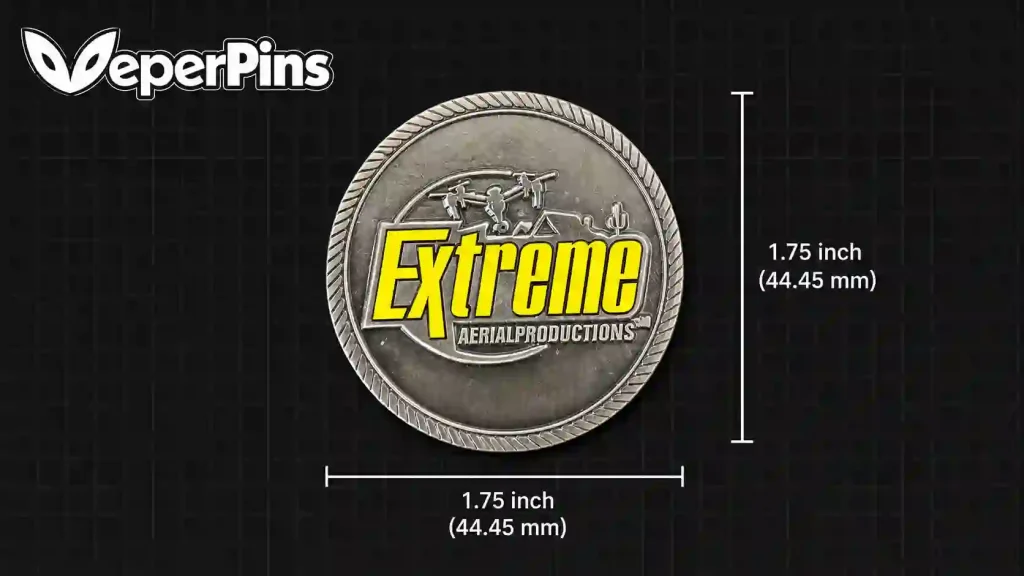
1.75-Inch Challenge Coins — 44.45 mm
A 1.75-inch coin is one of the most popular challenge coin sizes and a safe choice for many projects. It provides enough room for a center logo, main emblem, outer-ring text, year, and short motto while keeping cost, weight, and hand feel well balanced.
If your design is not extremely complex but you still want the finished coin to look official and well-made, 1.75 inches is usually enough. It works well for most standard challenge coins, team commemorative coins, and corporate gift projects.
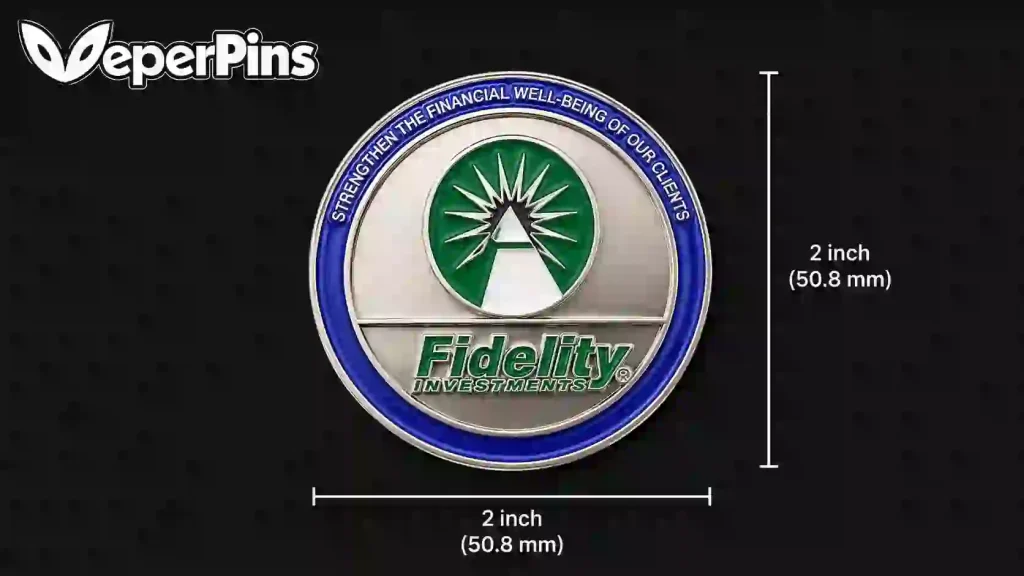
2-Inch Challenge Coins — 50.8 mm
A 2-inch challenge coin is one of the most practical common sizes. Compared with 1.75 inches, it gives your design more breathing room, makes text easier to read, and helps the artwork look less crowded.
If your design includes outer-ring text, a central badge, a commemorative date, department name, double-sided content, or simple 3D relief, 2 inches is usually a safer choice than 1.75 inches.
Simply put, if you are not sure whether to choose 1.75 inches or 2 inches, and your design has more than just a simple logo, 2 inches is often the better option.
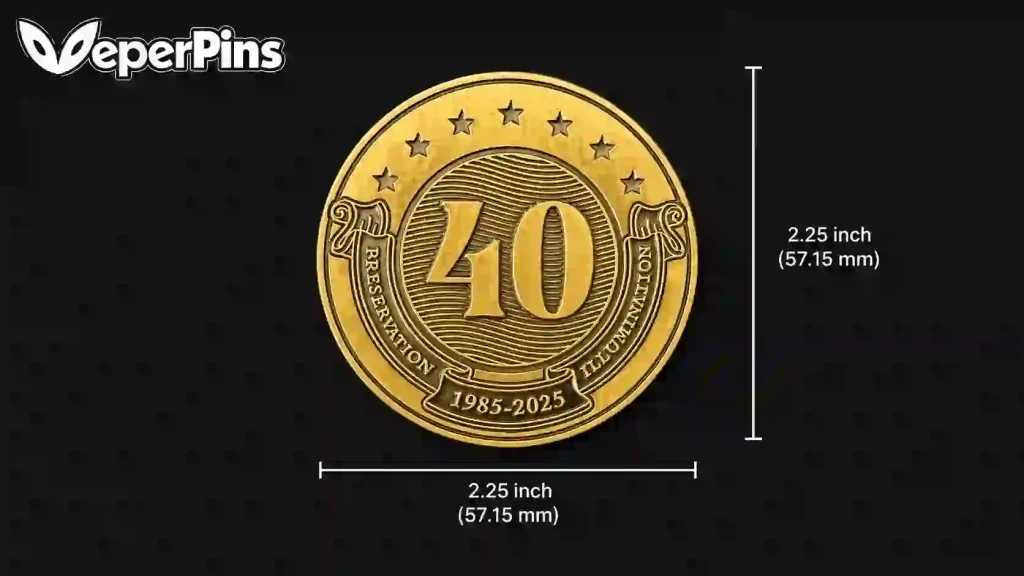
2.25-Inch Challenge Coins — 57.15 mm
A 2.25-inch coin is a good choice for designs with more content and for projects where you want the coin to feel more substantial. This size allows more room for outer-ring text, detailed badges, double-sided artwork, building outlines, department emblems, or layered design elements.
If your design includes a logo, department name, year, motto, edge text, and back-side information, 2.25 inches will make everything easier to read compared with 2 inches.
It is also a good size for 3D relief because the larger surface area makes it easier to show detail.
However, if your design is only a simple logo with a few lines of text, there is usually no need to go up to 2.25 inches. Larger sizes increase material, plating, packaging, and shipping costs.
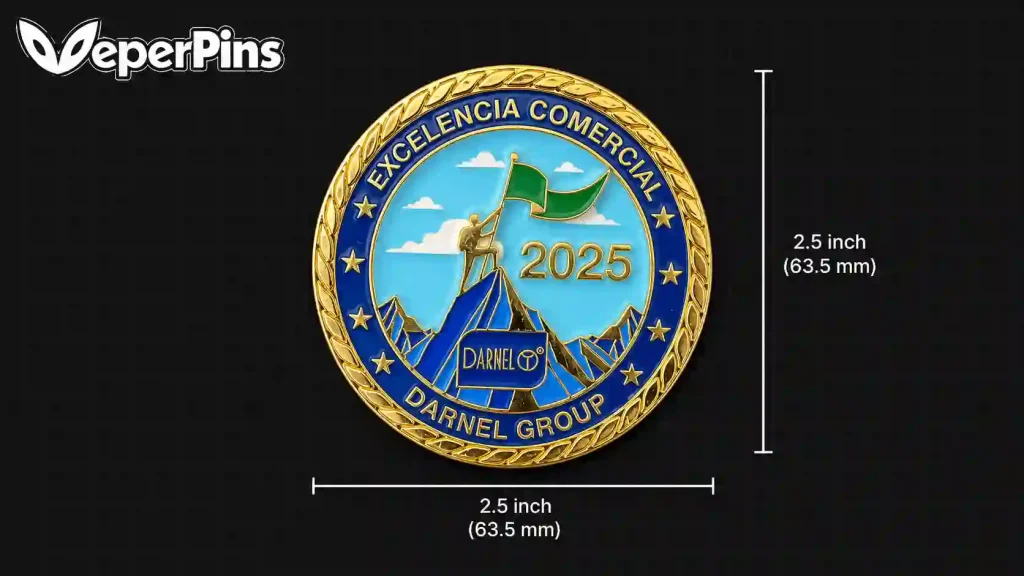
2.5-Inch Challenge Coins — 63.5 mm
A 2.5-inch coin is a larger size with stronger visual impact. It works well for detailed 3D relief, portraits, building artwork, bottle opener coins, and full double-sided designs.
This size is better for premium gifts, collector coins, and important commemorative projects. However, it is heavier and costs more, so it may not be the best choice for bulk distribution or everyday carrying.
2.75–3 Inch Challenge Coins — 69.85–76.2 mm
A 2.75–3 inch challenge coin is close to a display coin size. It is suitable for large artwork, deep 3D relief, complex commemorative scenes, limited-edition collector projects, or high-end gifts. These sizes have strong visual impact and are best paired with a velvet box, acrylic box, or display case for a more complete presentation.
When choosing a 2.75-inch or 3-inch coin, it is important to consider the finished weight, packaging method, and shipping cost in advance.
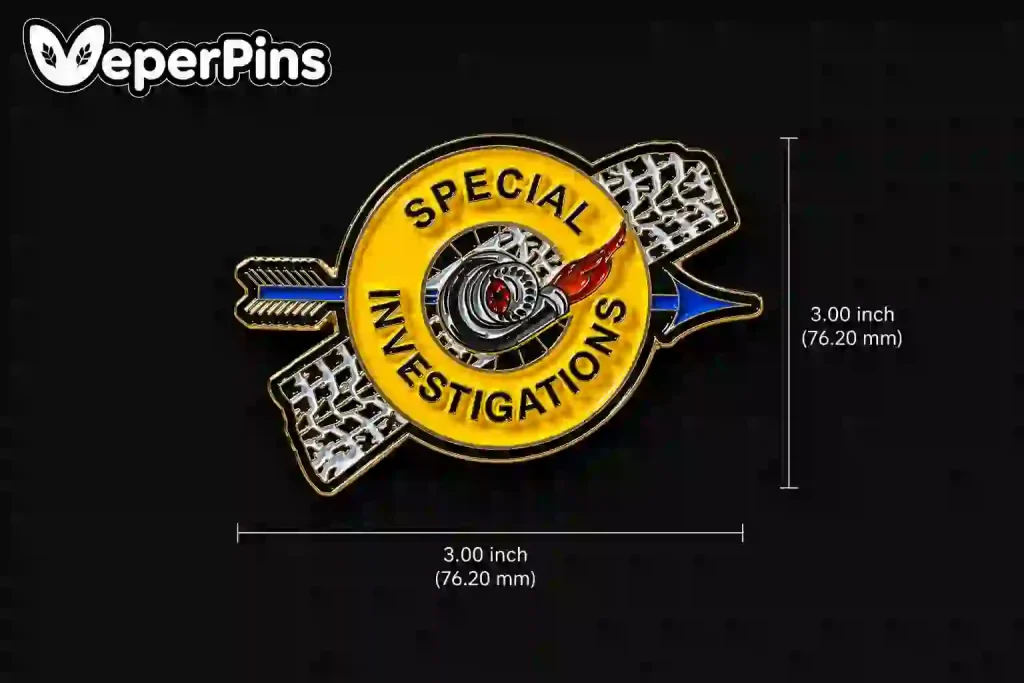
Larger Challenge Coins — Over 3 Inches
Challenge coins over 3 inches are usually special custom sizes. They are better suited for awards, displays, collector pieces, or commemorative presentation items. These larger sizes can support more complex shapes, such as oversized emblems, 3D buildings, custom outlines, bottle opener structures, or multi-layer 3D effects.
For coins in this size range, it is best to confirm the intended use first, then decide the best production plan based on artwork complexity, thickness, weight, and packaging requirements.
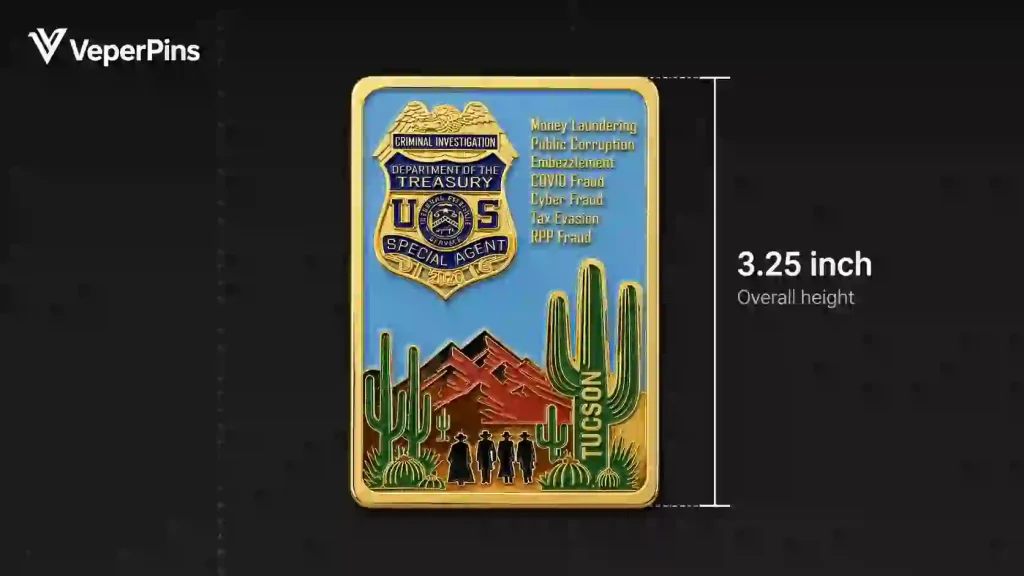
Challenge Coin Sizes in Real Life
If you are not sure how large different challenge coin sizes feel in real life, you can compare them with familiar everyday objects. These comparisons are mainly for understanding diameter. The actual hand feel will also depend on thickness, material, weight, and production method.

How Much Does a Custom Challenge Coin Weigh?
There is no fixed standard weight for a custom challenge coin. Weight depends on the size, thickness, material, 3D relief, cutouts, edge style, and the raised or recessed areas in the design. The estimates below are based on a common zinc alloy round coin with a thickness of about 3 mm.
Please note that these are only general estimates. If you choose a thicker coin, brass material, complex 3D relief, or a special edge design, the actual weight may be higher. If your design includes cutouts, holes, or a bottle opener feature, the weight may be lower.
How Thick Should a Challenge Coin Be?
Thickness is an important part of a high-quality challenge coin. It affects the coin’s weight, hand feel, and overall premium look.
For most custom challenge coins, 3 mm is the standard thickness. It feels solid in hand, works well for most designs, and keeps the cost reasonable.
If you need a lighter or more budget-friendly option, 2.5 mm can be used for simple logos, small coins, event giveaways, or large-volume orders. However, it will feel thinner than a 3 mm coin.
For a heavier and more premium feel, 3.5 mm or 4 mm is a better choice. These thicknesses are ideal for collector coins, award coins, commemorative gifts, and designs with deep 3D relief, portraits, buildings, or layered details.

How to Measure Challenge Coin Size
Custom challenge coins do not have to be round. In addition to the traditional round shape, they can also be made as squares, rectangles, shields, triangles, badges, or fully custom shapes.
To keep quotes clear and consistent, we usually measure a custom coin by its longest side. In other words, no matter what shape your coin is, the longest distance from one end to the other is the size used for pricing.
For example, a round challenge coin is measured by its diameter.
A rectangular challenge coin is usually measured by its length.
A shield-shaped, badge-shaped, or custom-shaped coin is measured by the longest overall direction of the design.
Simply put, challenge coin pricing is mainly based on the longest side. This avoids confusion between different shapes and helps keep each quote clear and consistent.
You can refer to the image below to see how different coin shapes are usually measured.

Does Challenge Coin Size Affect the Price?
Different challenge coin sizes come with different costs. In general, larger coins require more metal, a larger plating area, and more finished weight. As a result, mold costs, production costs, packaging costs, and shipping costs may all increase.
However, price is not determined by size alone. Thickness, order quantity, number of enamel colors, 3D relief, bottle opener structure, special edges, packaging, and shipping method can all affect the final quote.
If you want to control your budget, choose the size based on the complexity of your design instead of simply choosing the smallest option. For a simple logo or short text, a smaller size may work well. But if your design includes many details, double-sided artwork, or 3D relief, a slightly larger size can make the artwork clearer and the finished coin look better.
Other Details to Consider When Choosing a Coin Size
Choosing the right size is not only about how complex the design is. You should also think about who will receive the coin, how it will be used, and what kind of impression you want it to make. Sometimes, even a half-inch difference can completely change how the finished coin feels.
1. Think About the First Impression
A challenge coin is not only viewed on a computer screen. It will eventually be held in someone’s hand, placed in a gift box, or handed out at an event.
If you want the recipient to immediately feel that the coin is official and substantial, a slightly larger size, such as around 2 inches, may be a better choice.
If it is only meant to be a lightweight giveaway, a larger size may increase the cost without adding much practical value.
2. Make Sure the Text Is Easy to Read
Many challenge coin designs look clear on a computer screen, but once reduced to the actual coin size, outer-ring text, dates, department names, and small slogans can become difficult to read.
Before confirming the size, it is helpful to print the design at actual size and take a look.
If the printed version already feels too small, the finished metal coin will likely be even harder to read. In that case, you may need to increase the size or simplify the text.
3. Decide Whether the Coin Will Be Carried or Displayed
If the coin will be carried, used as a daily keepsake, or handed out in bulk, it should not be too large. A large coin may look impressive, but it is less convenient to put in a pocket, wallet, or small gift bag.
If the coin is mainly for awards, collecting, display, or gift-box presentation, a larger size can work better. It gives the artwork more space and creates a stronger visual impact.
4. Consider the Packaging
Coin size also affects packaging options. Smaller challenge coins work well with standard OPP bags, velvet pouches, or simple display cards.
For 2.5-inch, 3-inch, or larger challenge coins, velvet boxes, acrylic boxes, or display cases are usually better choices.
When choosing a size, do not only think about the coin itself. Also consider whether you need packaging. A slightly larger coin often looks more balanced in a formal presentation box.
5. Consider Order Quantity and Shipping Cost
The larger the coin, the heavier each piece will be. For small orders, this may not make a big difference. But for hundreds or thousands of coins, the weight difference can directly affect shipping costs.
For large-volume event giveaways, a practical and lightweight size is usually better.
For small premium commemorative projects, you may want to focus more on hand feel and presentation instead of only the unit price.
6. Check Whether You Need Edge Text or a Special Edge
If your design includes edge text, rope edge, oblique line edge, reeded edge, or another special edge style, a very small coin may limit the effect.
A larger coin makes edge details easier to see and helps prevent the artwork and edge elements from feeling crowded.
7. Start With 1.75 Inches or 2 Inches If You Are Not Sure
If you are not sure which size to choose, start by comparing 1.75 inches and 2 inches.
A 1.75-inch coin is better for budget control and bulk production. A 2-inch coin looks more formal and gives your design more room for details.

Need Challenge Coin Size Inspiration?
If you are still unsure which challenge coin size to choose, you can start by browsing our gallery. Seeing real customer projects, size choices, production methods, and finished results may give you helpful ideas.
If you are looking for a reliable supplier to create beautiful, cost-effective custom challenge coins, VeperPins is here to help. Our team can help you choose the right size, refine your artwork, and manage production and delivery from start to finish.
FAQ
What size is best for 3D, bottle opener, or custom-shaped coins?
We usually recommend 2 inches or larger. For 3D relief, bottle opener features, or complex shapes, 2.25 inches or 2.5 inches often gives better results.
What packaging works for coins over 3 inches?
Large coins are better suited for velvet boxes, acrylic boxes, display cases, or gift boxes. For heavier coins, an inner insert helps protect the coin and improve presentation.
Do larger coins take longer to produce?
Regular sizes usually have similar production times. Very large coins may take longer, especially with 3D details or special functions.
Should I choose a 1.75-inch or 2-inch challenge coin?
Choose 1.75 inches for a standard, budget-friendly coin. Choose 2 inches if you want more space for text, outer-ring wording, double-sided artwork, or detailed badge elements.


