Table of Contents
When designing a custom challenge coin, do you pay attention to the edge? Many people focus on the artwork, text, and plating colors on the front and back, but the edge is often overlooked. In fact, the edge is one of the key details that helps create a truly well-crafted challenge coin.
The right edge style can enhance the overall look and feel of the coin while giving it a more distinctive character and meaning. For example, a standard edge often conveys a clean, simple, and timeless look, while a rope edge is commonly associated with unity, honor, and connection.
As a professional custom challenge coin maker, VeperPins has organized the edge styles most commonly requested by our customers into 10 popular challenge coin edge options.
In this guide, we’ll walk you through each option, explain where it works best, and help you choose the right edge for your design.
1.Standard Edge
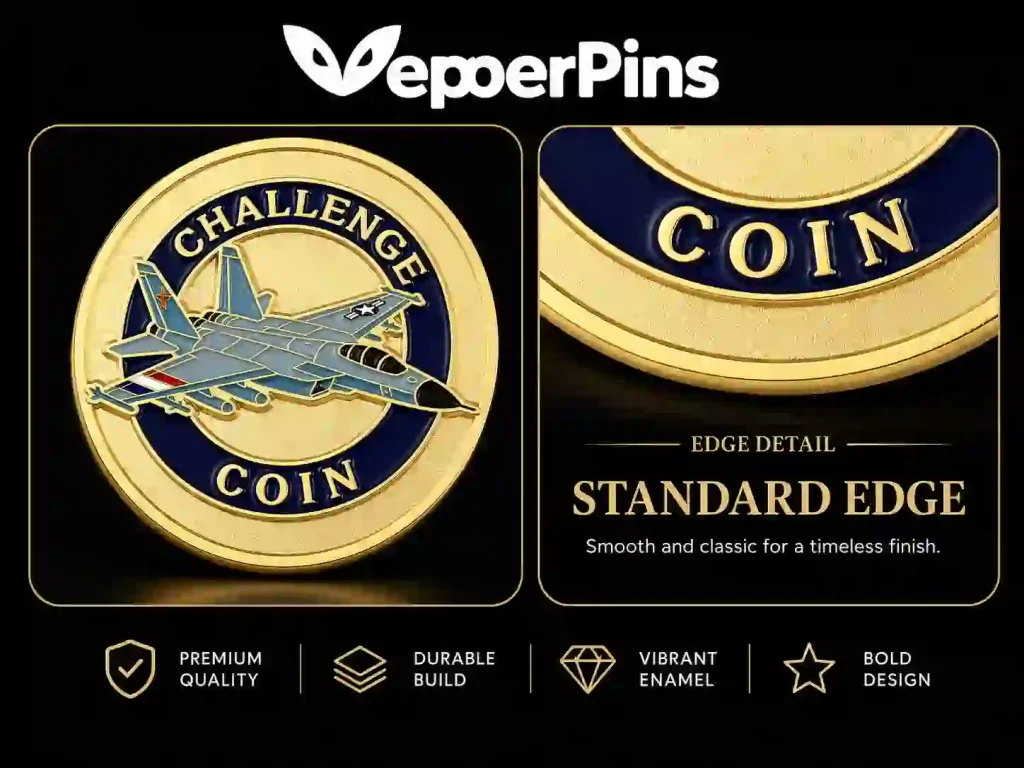
The standard edge, also called a flat edge, is the most common edge option for custom coins. It has a smooth, clean side profile without any extra decorative cutting or special machining.
When paired with polished plating, the side of the coin can reflect light with a mirror-like finish, giving the whole piece a crisp, simple, and refined look.
This is a safe and classic choice for clean artwork, simple layouts, or any design where you want the front and back of the coin to remain the main focus.
2.Rope Edge
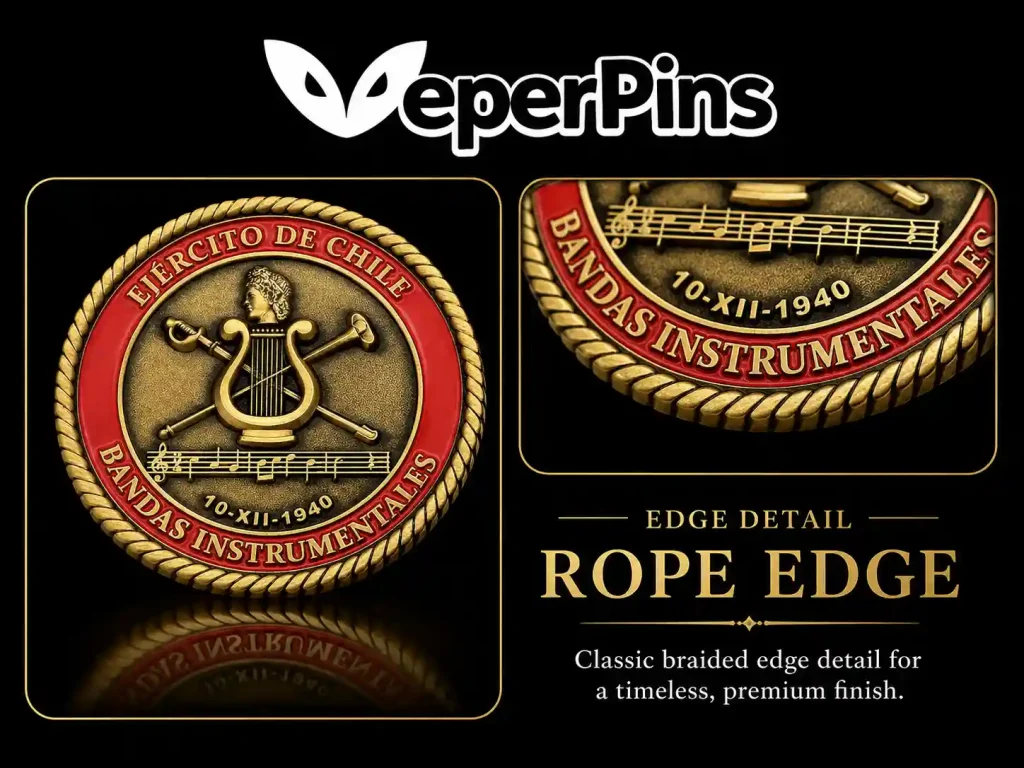
The rope edge is one of the most popular upgrades for custom challenge coins. Its twisted rope-like pattern adds depth, texture, and a stronger sense of craftsmanship around the coin.
This edge is often associated with unity, strength, and connection, which makes it a great fit for military units, police departments, fire departments, corporate teams, and commemorative events.
If you want the coin to feel more substantial and meaningful without making the design too flashy, the rope edge is a very balanced choice.
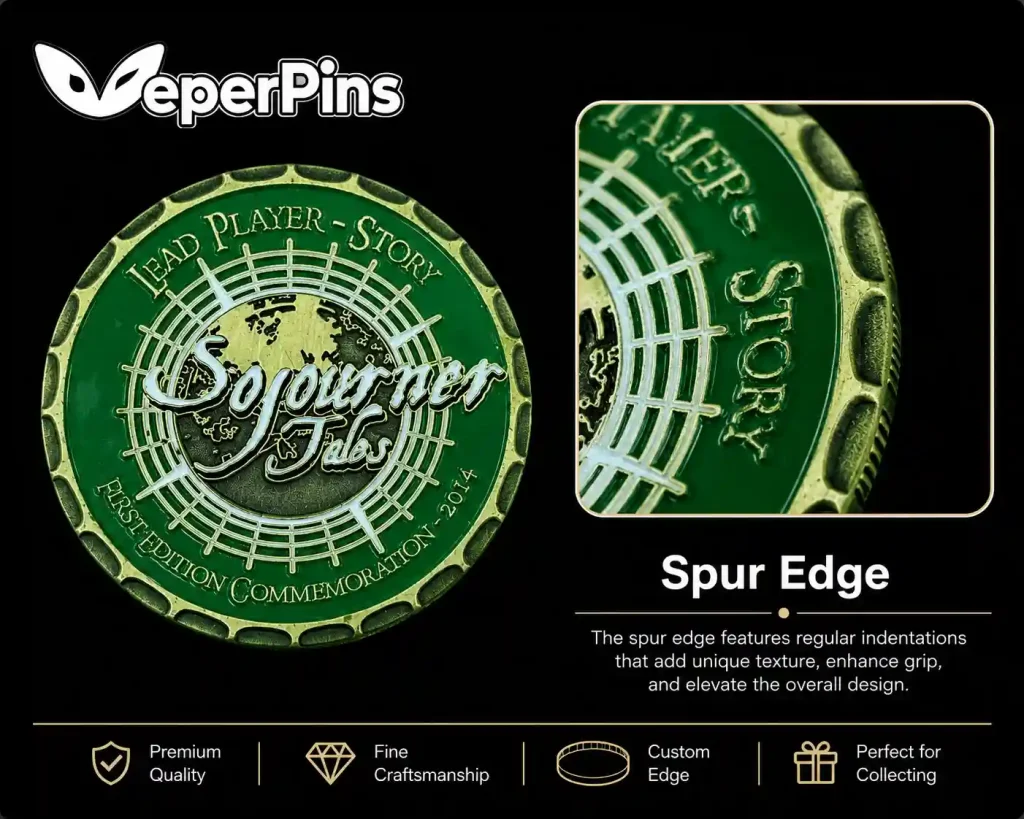
3.Spur Edge
The spur edge features a ring of small pointed details inspired by the spurs on cowboy boots. These raised metal points create a bold, rugged, starburst-like effect around the coin, making the design feel stronger and more distinctive.
This edge works well for military units, law enforcement, outdoor groups, Western-themed events, and honor or recognition coins. Compared with a standard edge, it has a more uncommon look and can help the finished coin stand out.
Spur edges pair especially well with 3D relief and antique plating finishes, such as antique gold, antique silver, and antique copper. Since this is a special edge option, it usually requires an additional upgrade fee.
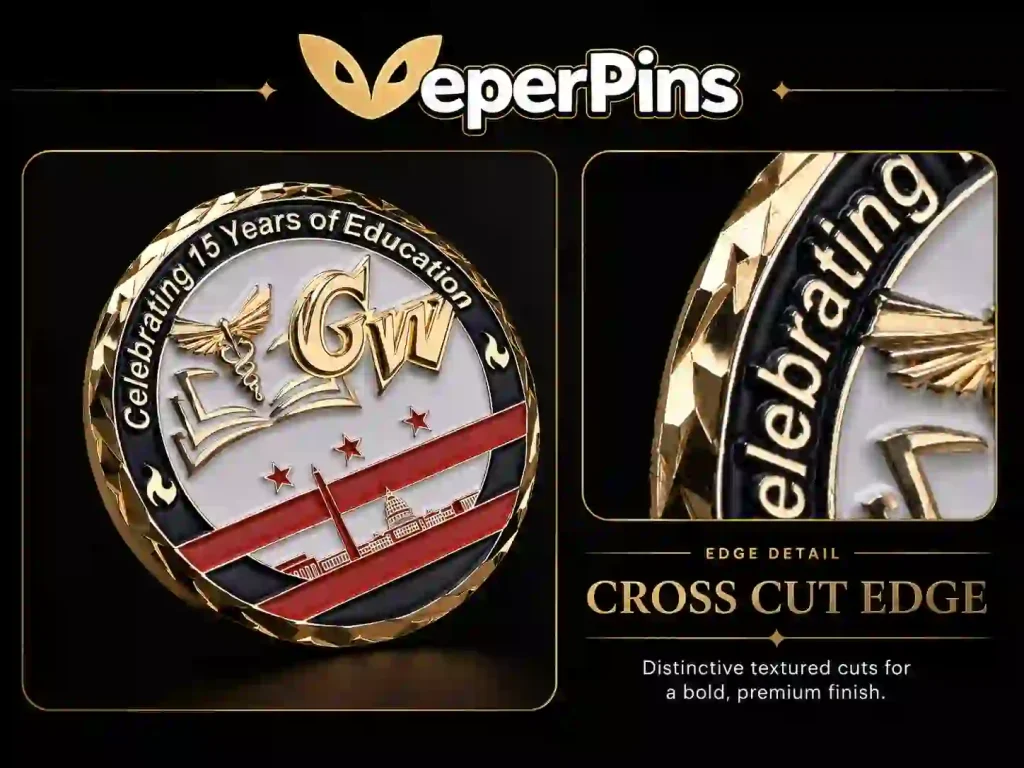
4.Cross Cut Edge
The cross cut edge, also known as a diamond cut edge, is made by adding multiple angled cuts around the coin edge. These cuts cross over each other to create a diamond-like texture that reflects light from different angles.
This edge gives the coin a brighter, sharper, and more premium appearance. It works especially well with gold, bright silver, black nickel, and antique gold plating, where the light and shadow details become more noticeable.
If your design has rich artwork or you want the finished coin to feel more collectible, the cross cut edge is a strong upgrade option. It adds visual interest around the coin without changing the front or back design. Because it requires extra machining, an upgrade fee usually applies.
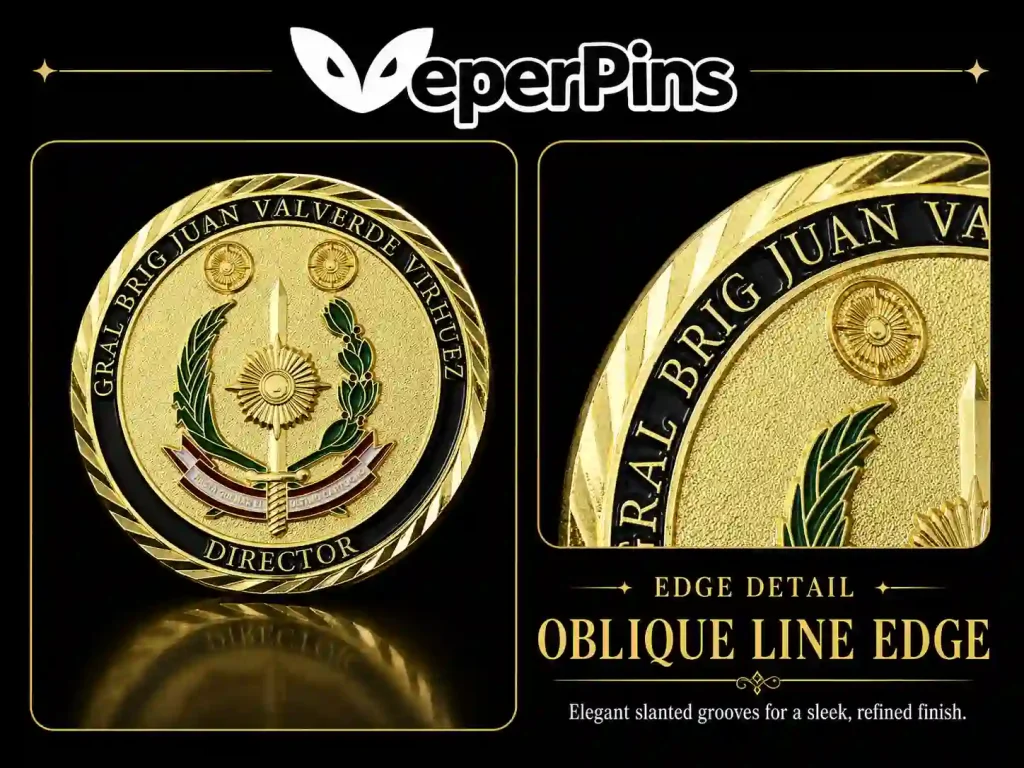
5.Oblique Line Edge
The oblique line edge is a clean and subtle edge option with angled lines running around the coin. From the side or back, it creates a continuous spiral-like texture that adds detail without making the coin look too busy.
Compared with a flat edge, it gives the side of the coin more metal texture. Compared with a cross cut edge, it feels quieter, cleaner, and more understated.
This is a good choice when you want the coin to look more refined, but do not want a bold or flashy edge. It adds a finished look while keeping the overall design professional and easy to read.
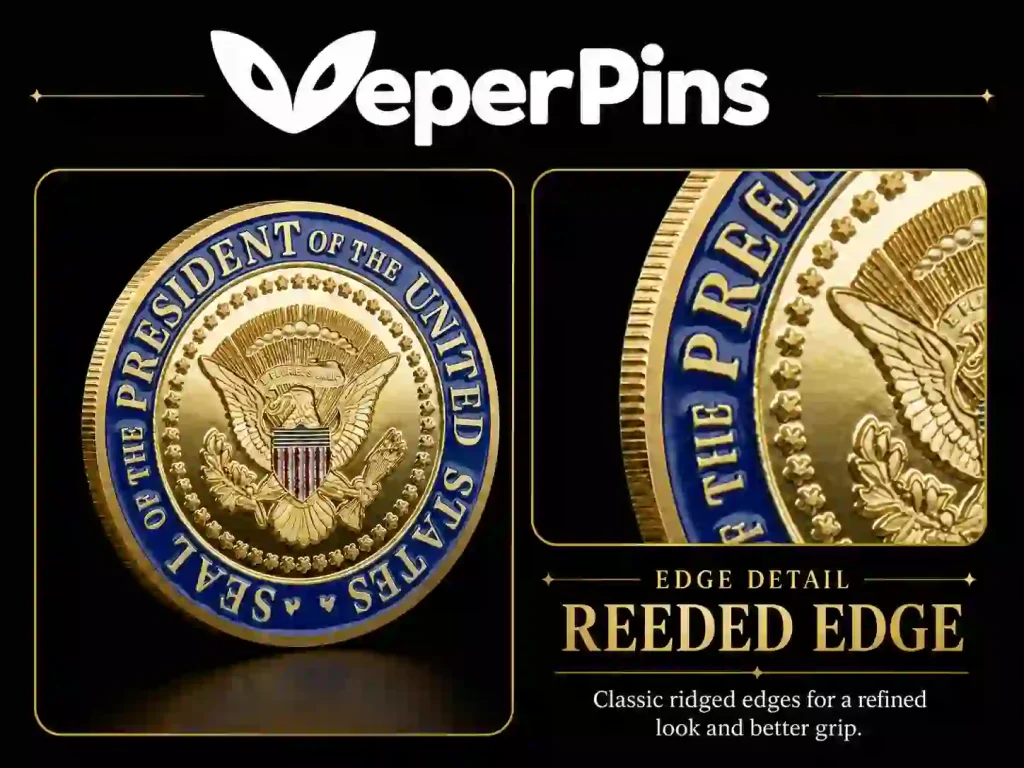
6.Reeded Edge
The reeded edge is a classic coin edge style made with a ring of evenly spaced vertical grooves. It gives the side of the coin more texture and a more traditional coin-like feel.
This option works well for formal designs, commemorative coins, corporate coins, and designs that need a clean but finished edge. It is more restrained than a cross cut or oblique line edge, so it will not compete with the main artwork.
Because the reeded edge requires extra processing, it is usually priced as an upgrade from the standard flat edge.
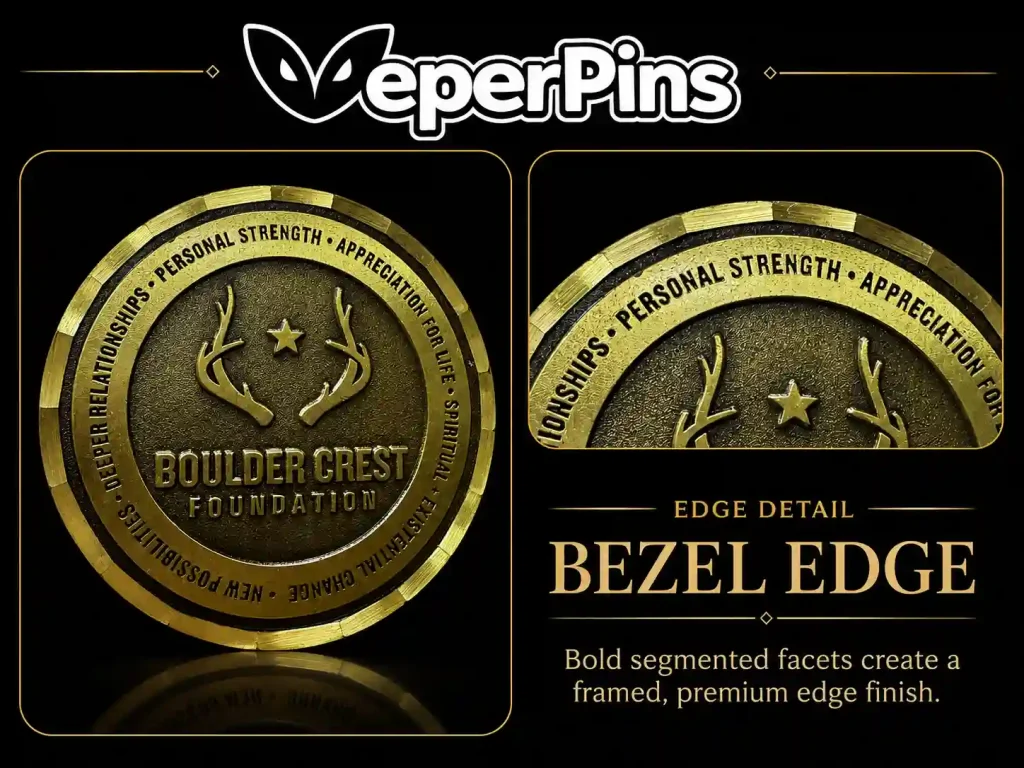
7.Bezel Edge
The bezel edge is a refined edge style with a smooth sloped rim around the coin. Instead of adding a strong pattern, it creates a soft transition from the coin face to the outer edge.
The angled surface catches light in a subtle way, making the coin look fuller and more polished. It is less decorative than a cross cut, reeded, or oblique line edge, but it gives the finished piece a cleaner and more complete appearance.
This edge is a good option for designs that need a premium look without heavy texture. It keeps the focus on the main artwork while adding a more finished profile to the coin.
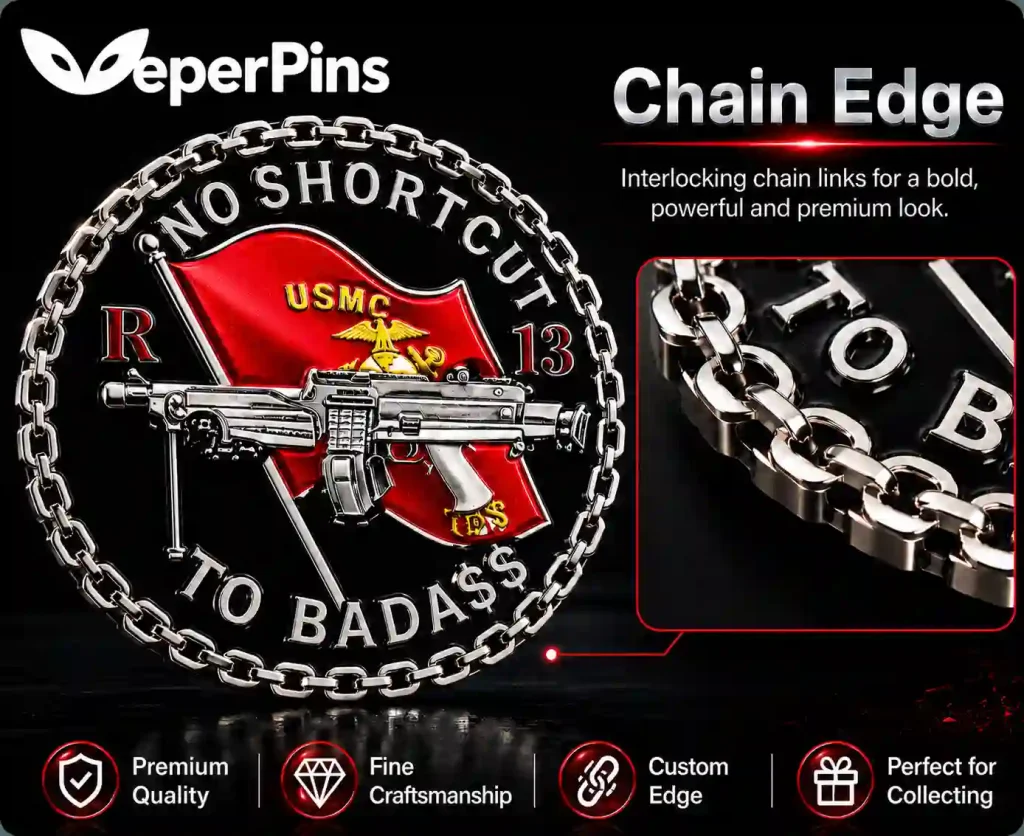
8.Chain Edge
The chain edge has a strong military and honor-recognition feel. It looks like a continuous ring of interlocking metal chains around the coin, giving the edge a bold, heavy, and powerful appearance.
This style is often used for U.S. Army, Navy, veteran, and service-related coin designs. The chain pattern naturally suggests unity, protection, strength, and identity.
It works well with emblems, shields, eagles, flags, ships, unit numbers, and years of service. A chain edge is an upgrade option and usually costs more than a standard flat edge.
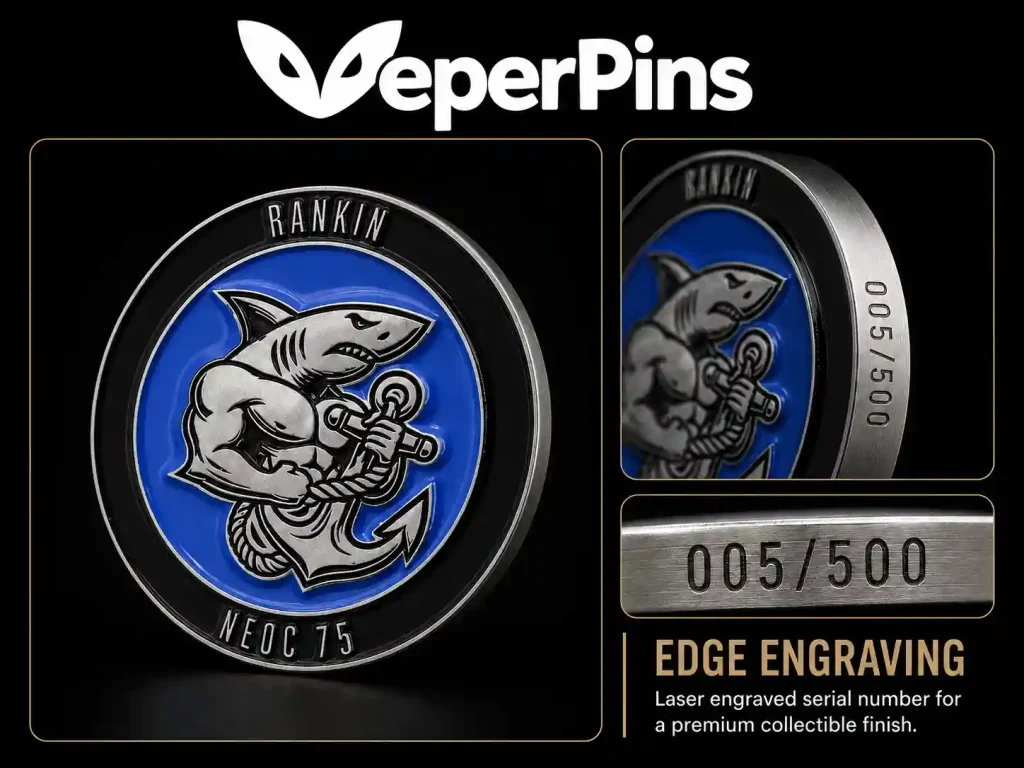
9.Edge Engraving
Edge engraving is usually added to a standard flat edge by laser engraving text, numbers, or symbols onto the side of the coin. The engraving can create a slightly recessed look, making the edge detail clear and permanent.
One common use is individual numbering. For example, if you order 200 coins, each piece can be engraved as 001/200, 002/200, and so on up to 200/200.
You can also engrave names, award titles, team names, dates, or special codes on the edge. This is a good choice for limited-edition coins, award coins, member recognition, corporate gifts, and projects that need each piece to feel more personal or collectible. Edge engraving requires an additional fee.
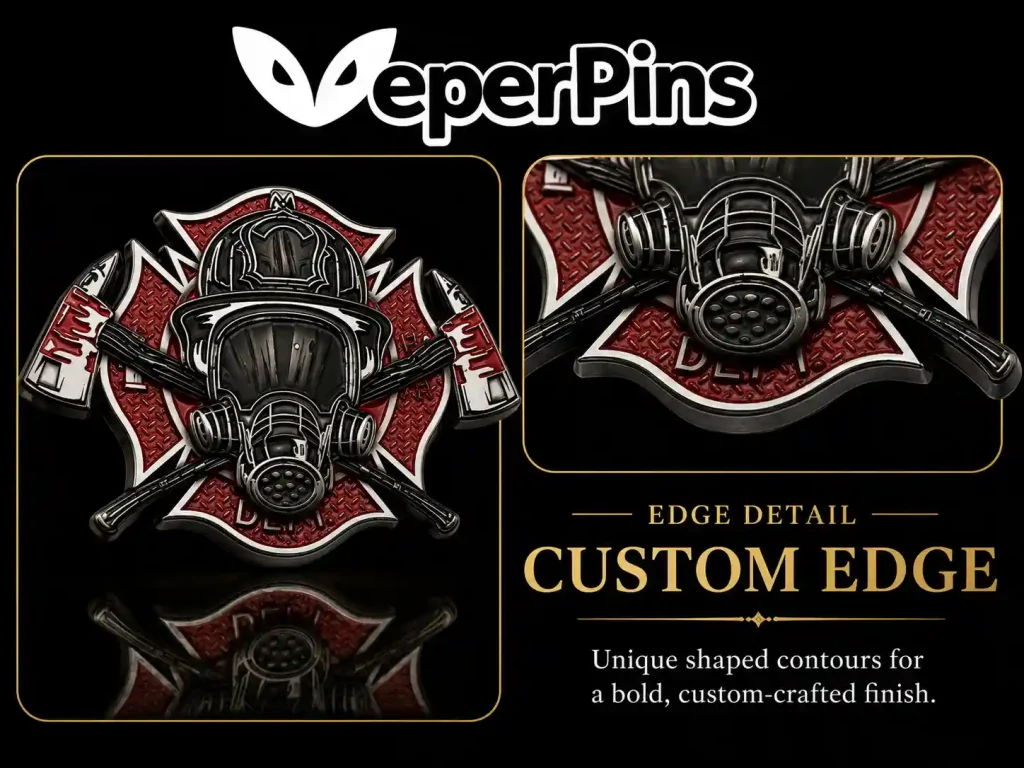
10.Custom Edge
A custom edge is often used for irregular-shaped challenge coins or designs with a strong theme. Instead of a standard round outline, the outer shape can follow the artwork, such as an anchor, ship wheel, sword, shield, gear, badge outline, flame, or other symbolic shape.
This makes the edge part of the design rather than just a border. For example, a navy coin can use an anchor or ship wheel shape, a knight-themed coin can include a sword or shield outline, and a firefighter coin can use flames, axes, or a badge-style frame.
A custom edge can make the coin more memorable and better connected to the theme. The cost is usually not calculated like a regular edge upgrade. It depends more on the mold structure, outer shape, and overall design complexity.
Which Edge Is Best for Your Custom Challenge Coin?
There is no single best edge for every challenge coin. It mainly depends on the style and feeling you want the design to show. A standard flat edge gives the coin a clean and classic look. Rope edge, chain edge, and spur edge add more strength and character, while cross cut edge, oblique line edge, and reeded edge bring in more metal detail and make the finished coin look more refined.
Of course, the edge is only one part of a custom challenge coin design. Other details, such as specifications and production process, can also affect the final result. If you want to understand these choices in a more complete way, you can continue reading our Custom Challenge Coins Guide.
If you already have artwork, you can also send it directly to VeperPins. We can help you choose a suitable edge based on your design style and the finished effect you want, so the coin looks more complete and well-made.