Table of Contents
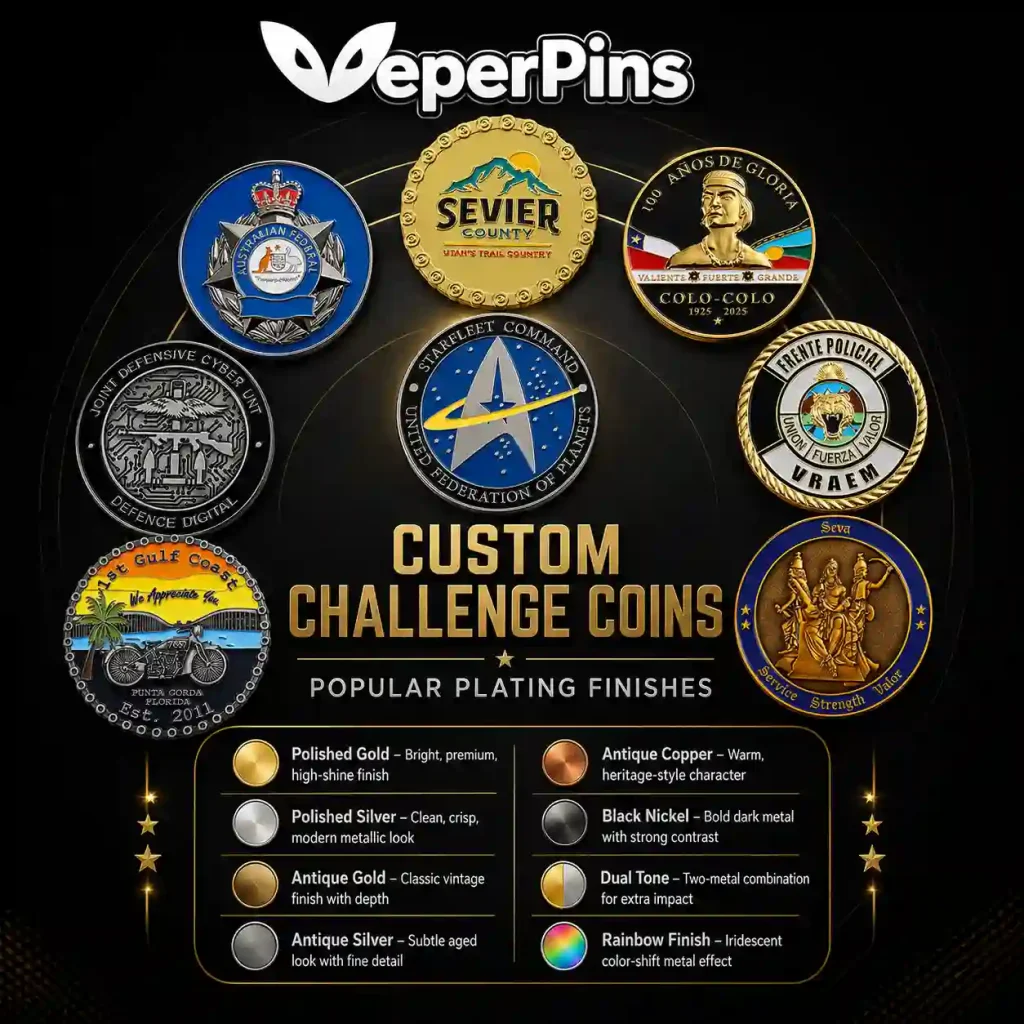
Choosing the right plating is one of the most important steps when creating custom challenge coins. The plating affects not only the color of the coin, but also its overall appearance, detail visibility, and premium feel.
At VeperPins, many customers choose gold plating for military coins, award coins, and formal commemorative gifts, while silver plating is often used for navy emblems, corporate logos, and clean modern designs. Antique copper, antique silver, black nickel, and other finishes are also popular for coins with detailed relief, vintage themes, or bold contrast.
In this guide, we’ll explain the most common plating options for custom challenge coins and help you choose the best finish for your design.
High-Polish Gold Plating
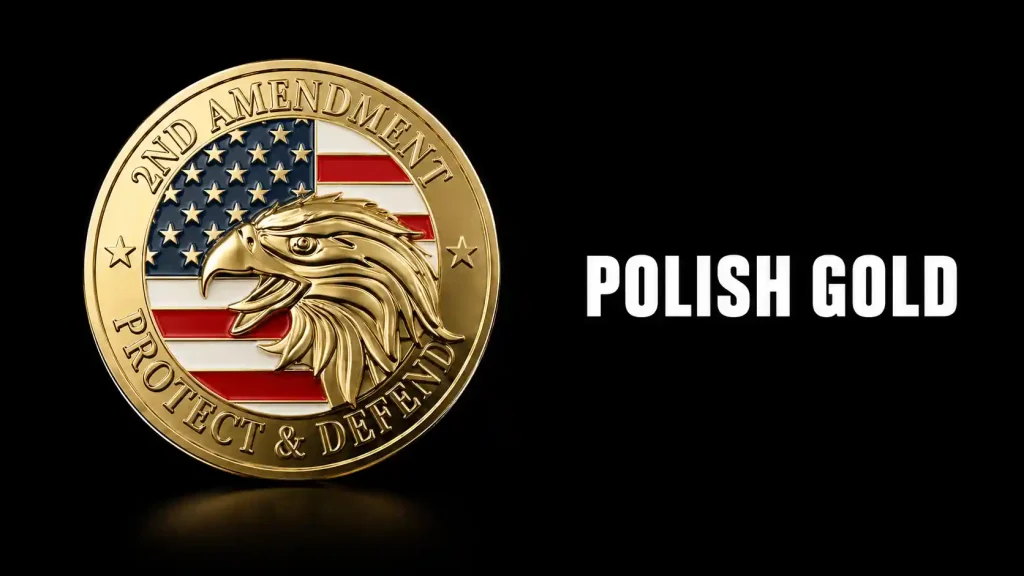
High-polish gold, also known as imitation gold plating, is one of the most popular finishes for custom challenge coins. It is not real gold, but it uses an electroplating process to create a bright gold-like appearance.
This finish has a smooth, reflective surface that gives challenge coins a formal and prestigious look. It is often used for military challenge coins, commemorative coins, award coins, recognition gifts, and custom projects that need a premium appearance, such as designs for the Army, Coast Guard, government agencies, or honor-based events.
High-Polish Silver Plating
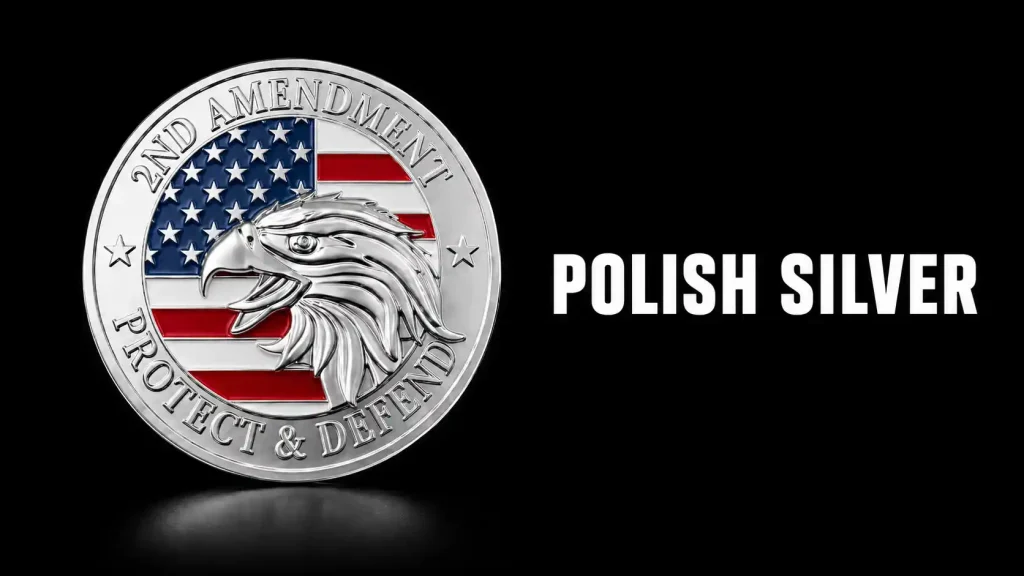
High-polish silver plating is not made of pure silver, but it creates a similar silver-colored metal effect. Its surface is smooth, bright, and highly reflective, giving the coin a clean and modern appearance.
Compared with gold, silver feels cooler, cleaner, and more understated. It is a great choice for corporate logos, branded commemorative coins, modern-style designs, and navy-themed challenge coins. If your design is business-oriented, tech-inspired, minimalist, or professional, high-polish silver is a very suitable option.
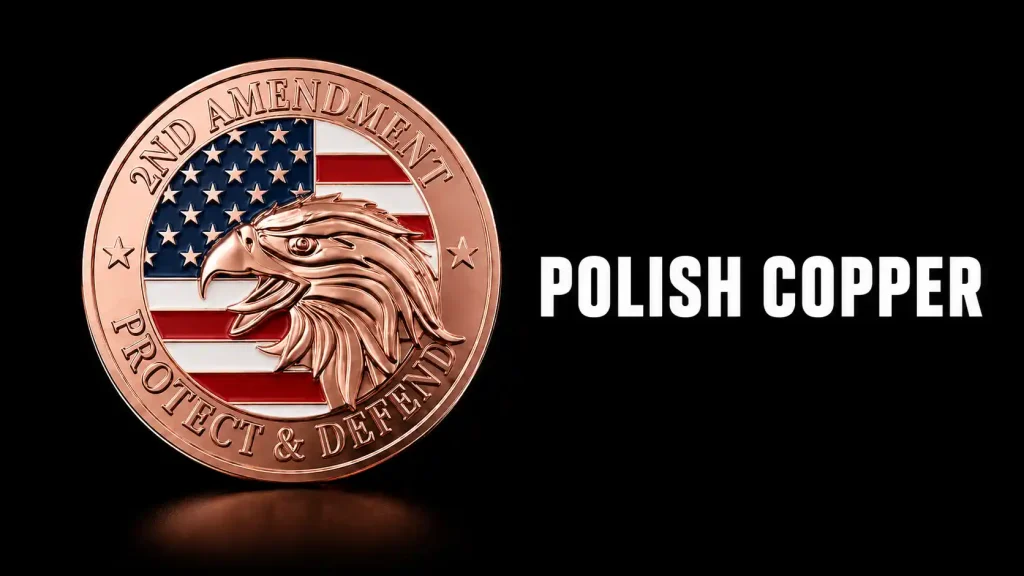
High-Polish Copper Plating
High-polish copper plating is less common than gold or silver, and it is usually more expensive. After polishing, it creates a reddish metallic shine that feels warm, vintage, and artistic.
This finish works well for historical themes, rustic styles, vintage artwork, commemorative coins, and projects that need a distinctive metal look. If you want something different from the usual gold or silver finish, high-polish copper is worth considering.
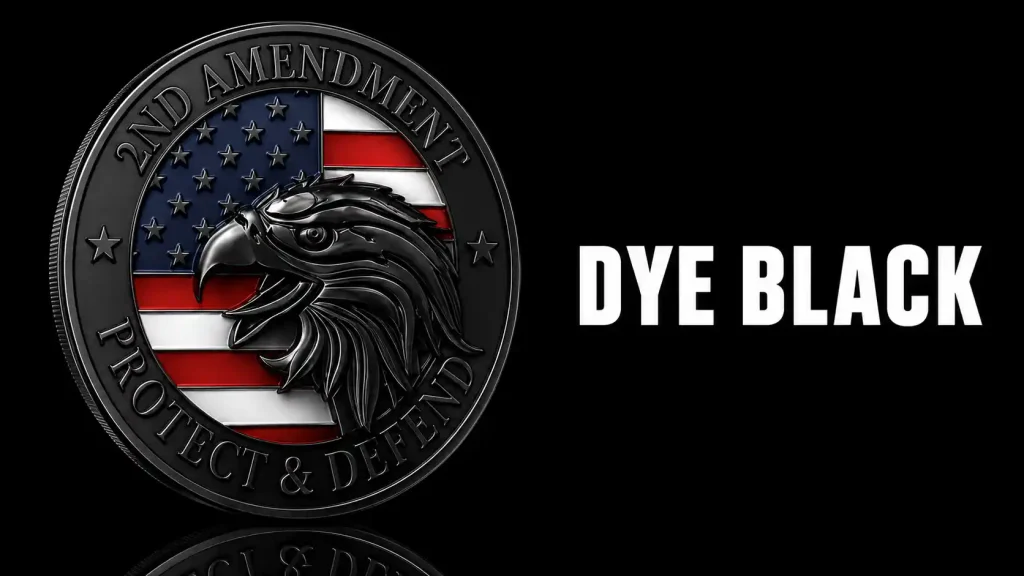
Black Nickel Plating
Black nickel plating is ideal for designs that need a modern look and strong visual contrast. If your artwork includes bright colors, neon elements, cartoon characters, or mascots, the dark metal background can make those colors stand out even more.
This finish also helps improve the clarity of text, lines, and color blocks, making the edges of the artwork appear sharper. For streetwear-inspired designs, anime-style coins, brand mascots, event coins, or any challenge coin that needs a bold visual impact, black nickel is a very distinctive choice.
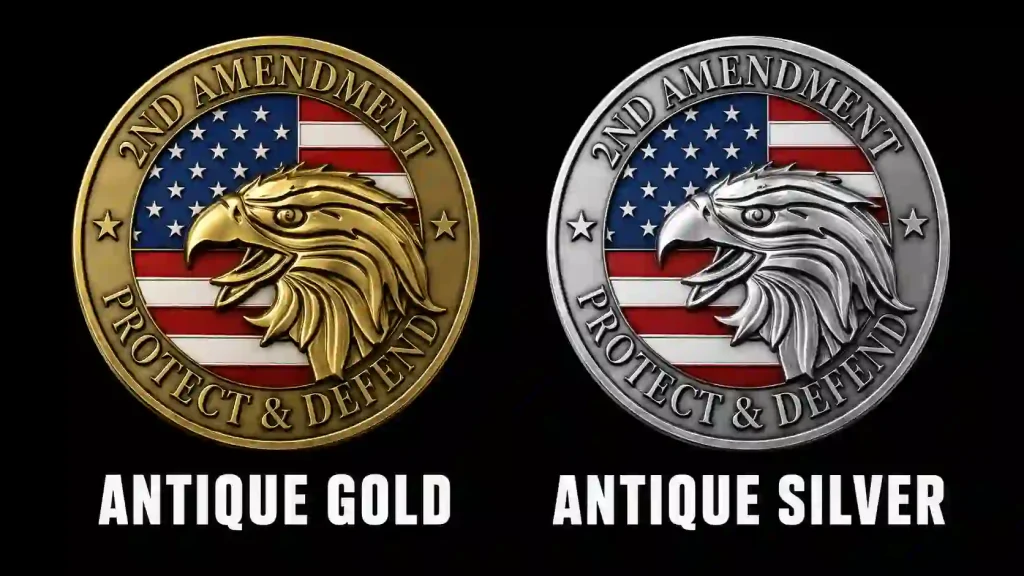
Antique Gold and Antique Silver Plating
Antique gold and antique silver are not as bright as high-polish gold or silver, but they are better for showing details and depth. Because these finishes have an aged look, the recessed areas create natural shadows, making fine details such as animal fur, architectural textures, emblem lines, and facial features more visible.
If your challenge coin includes complex artwork, 3D relief, crests, animals, portraits, or commemorative elements, antique gold or antique silver can display those details better than a bright polished finish. Due to the different finishing process, these options usually cost slightly more than standard high-polish gold or silver.
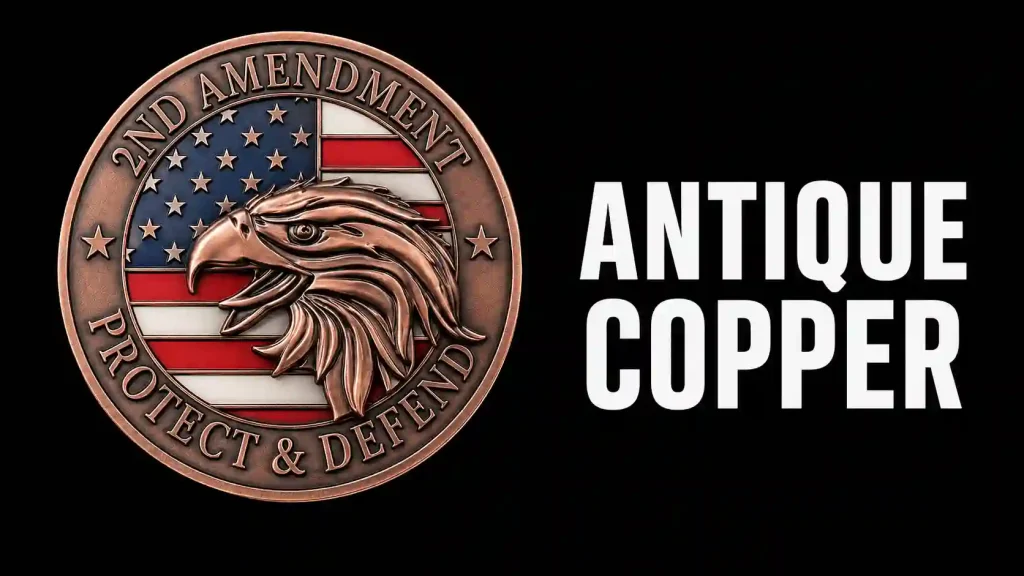
Antique Copper Plating
Antique copper has a reddish-brown metal tone. It looks more understated than bright gold and more vintage than regular copper. Its biggest advantage is that it makes the raised and recessed areas of a challenge coin more noticeable, which makes it especially suitable for relief designs, portraits, buildings, crests, and complex linework.
For 3D coins, antique copper creates natural highlights and shadows across different surface levels, giving the design more depth. For 2D designs, it can also make outlines and background layers appear clearer.
Another benefit is that antique copper does not show fingerprints as easily as mirror-like gold or silver finishes.
This makes it easier to maintain when the coins are handled, collected, or carried regularly. For portrait coins, historical themes, vintage styles, military or police coins, or any custom challenge coin that needs strong dimensional detail, antique copper is a reliable choice.
Dual Plating
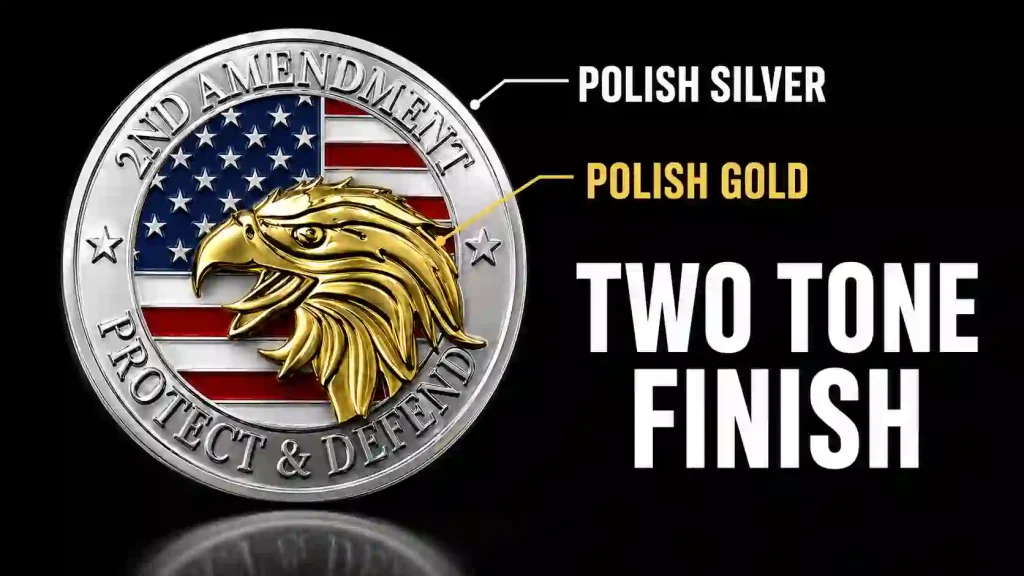
Dual plating uses two different metal colors on different areas of the same challenge coin. This helps highlight emblems, text, borders, or center artwork, giving the coin more depth and a more premium look.
This technique is often used for military coins, award coins, commemorative coins, and high-value gifts. It is a good choice for designs that need to express honor, rank, identity, or a specific focal point.
One thing to keep in mind is that dual plating is usually best done with finishes from the same category. For example, high-polish gold can be paired with high-polish silver, and antique gold can be paired with antique silver. High-polish finishes and antique finishes are generally not recommended together, as this may affect the final appearance.
Rainbow Plating
Rainbow plating gives the surface of a challenge coin a multi-color gradient effect. Depending on the light and viewing angle, you may see blue, purple, gold, green, and other metallic tones. Unlike standard gold or silver, rainbow plating creates a more dynamic and eye-catching appearance.
This finish is a great choice for trendy themes, event coins, artistic designs, anime-style artwork, brand mascots, or challenge coins with a younger and more creative visual style. If you want your coin to grab attention the moment someone holds it, rainbow plating is a memorable option.

Common Mistakes When Choosing Challenge Coin Plating
Many customers choose a plating finish based only on whether the color looks good, but they may overlook whether the finish actually works well with the design itself. For example, if a coin has complex 3D relief details, a very bright mirror-like finish may not show the details as clearly as an antique finish.
Another common mistake is ignoring how the coin will be used. If the coin will be handled often, carried around, or used as a keepsake, high-polish gold and silver may show fingerprints more easily. Antique copper, antique silver, and antique gold are usually more forgiving and can help the coin maintain a better appearance over time.
Some designs also include many bright colors, but when they are paired with standard gold or silver plating, the visual impact may not be strong enough. For this type of artwork, black nickel plating can be a better choice because it makes the colors stand out and gives the outlines a sharper look.
Not Sure Which Plating Finish to Choose?
After reading the plating options above, don’t worry if you are still not sure which finish is best for your design. You can send us your logo, artwork, or design idea directly. The VeperPins design team will recommend a suitable plating option based on your artwork details, intended use, budget, and overall style, helping your custom challenge coins look more balanced, refined, and professional.
If you would like to learn more about the full custom challenge coin process, design tips, and common production options, you can also read our complete guide. It will help you better plan your custom project from design to production.