
Table of Contents
Before you create a custom metal challenge coin, you may first think about the design, size, colors, and price. But the material is just as important, especially if you want the finished coin to have a more premium look and feel.
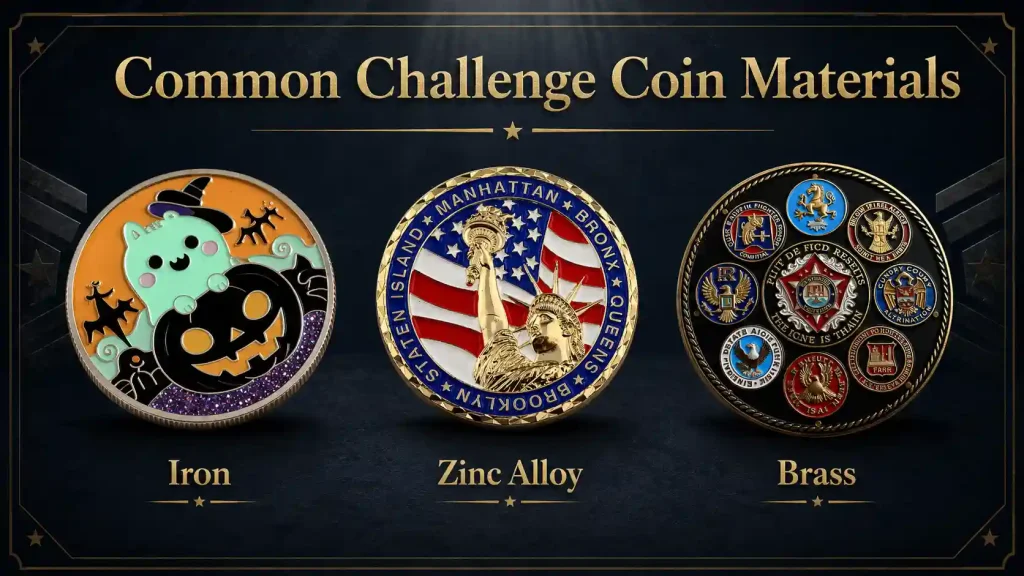
Common challenge coin materials include zinc alloy, brass, iron, and sometimes precious metals such as gold or silver. Each material has different advantages in weight, hand feel, durability, detail, and cost.
In this VeperPins guide, we will explain the differences between these materials and help you choose a suitable option for your custom challenge coin project.
What Are the Common Materials Used for Challenge Coins?
Below are the most common materials used for custom challenge coins, along with how each one affects the final look, hand feel, durability, detail, and cost of your coin.
Zinc Alloy (Most Popular)
Zinc alloy is a very commonly used material for die-cast custom challenge coins. It has good casting performance and is suitable for making challenge coins with complex shapes, rich details, custom outlines, or strong 3D effects. Zinc alloy castings usually have a smooth surface, good mechanical properties at room temperature, and good wear resistance.
Because zinc alloy has a relatively low melting point and is easy to die cast, it is especially suitable for custom challenge coins with complex shapes, 3D relief, cut-out designs, and various plating finishes.
Brass (Premium Material)
Brass is a relatively premium material choice for custom challenge coins. Compared with many standard materials, brass usually has a more solid hand feel, stronger metal texture, and a more refined appearance.
It works very well with antique plating, polished plating, enamel colors, and die struck designs without color fill. If you want your challenge coin to feel heavier, more durable, and more premium in hand, brass can be a good material choice.
Iron
Iron is an economical metal material for custom challenge coins. It has good hardness and a relatively low production cost. Therefore, it is suitable for custom projects with limited budgets, large quantities, or relatively simple designs. For companies that want to control their budget, iron can be a practical option.
Precious Metal Materials
In addition to copper, iron, zinc alloy, and stainless steel, some high-end custom challenge coins can also be made from precious metals such as gold and silver. These materials are usually used for collectible commemorative coins, limited-edition gift coins, award coins, or projects with special commemorative significance.
However, precious metal materials are more expensive, so they are usually more suitable for small-batch, high-value, or special custom projects.
Tip
For most custom challenge coin designs, zinc alloy is a common and practical choice because it offers a good balance between cost, detail, design flexibility, and overall texture.
Choosing the Right Material for Custom Challenge Coins
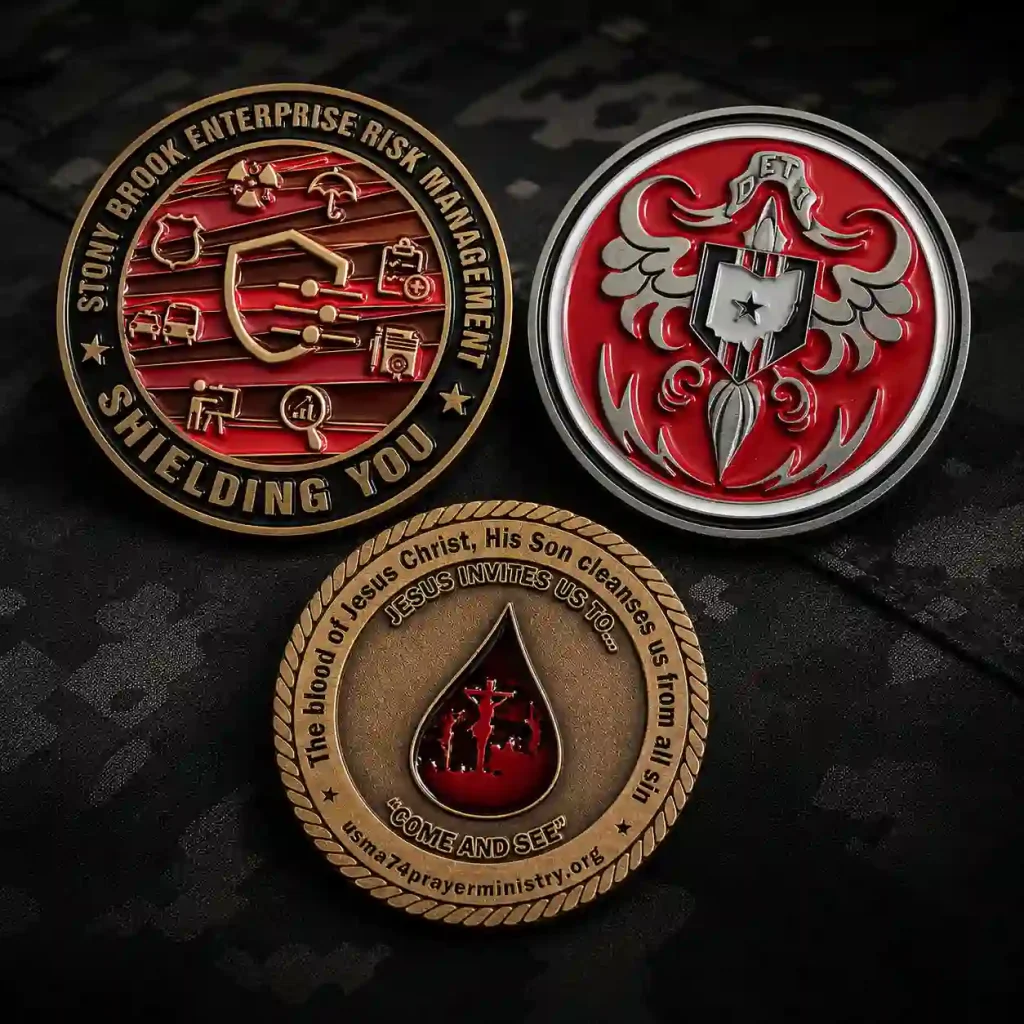
Different design requirements and budget ranges may lead to different material choices for custom challenge coins. In most cases, we usually recommend zinc alloy as the first choice. It is not only one of the most commonly used materials for custom challenge coins on the market, but also offers strong flexibility for different design needs.
Zinc alloy meets the main requirements of most challenge coin projects: flexible design, reasonable cost, and efficient production. Whether your design includes a logo, emblem, text, or complex artwork details, zinc alloy can help present these elements clearly. It also works well with enamel colors, 3D relief, high-relief designs, custom shapes, and cut-out effects.
In addition, zinc alloy is very friendly to different plating finishes. Gold, silver, antique copper, antique silver, black nickel, matte gold, and many other common plating colors can be applied well to zinc alloy challenge coins, making it suitable for a wide range of styles and uses.
If you are looking for a more high-end metal texture, or if your design requires finer stamping details, brass can also be a good choice. For the same size, brass challenge coins are usually heavier than zinc alloy coins, with a more solid hand feel and stronger metal texture. In general, a brass challenge coin of the same size may be about 10–20g heavier than a zinc alloy coin, depending on the size, thickness, and design structure.
However, brass usually comes with a higher cost, and the price of brass material is more affected by market fluctuations. As a result, quotations may vary at different times.
If your project has a sufficient budget and you care more about weight, metal texture, and overall quality, brass can be a better material choice for high-quality unique coins.
Iron Material: A More Cost-Effective Choice for Challenge Coins
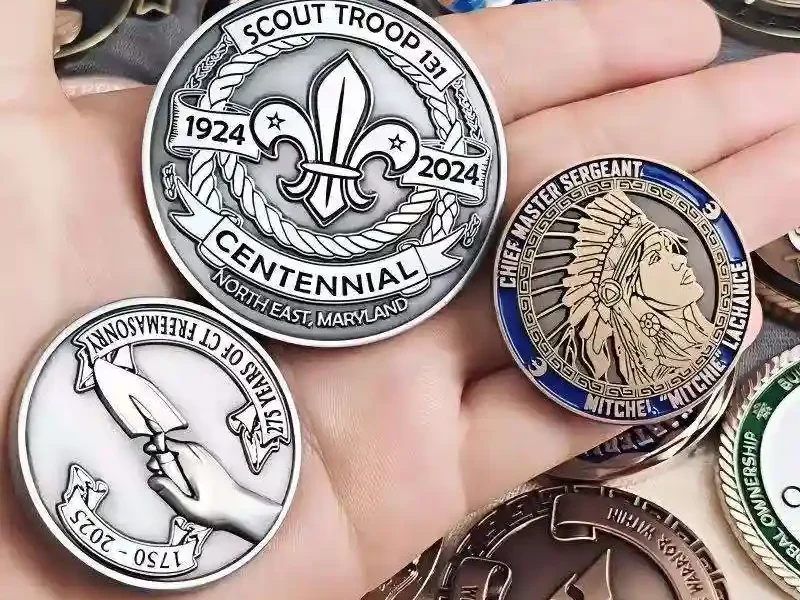
If your project has a limited budget, or if you need to quickly produce custom coins in large quantities, iron can be an economical material choice. It has a relatively low material cost, making it suitable for company events, promotional gifts, basic commemorative coins, and custom coins with relatively simple designs.
Iron has a certain level of hardness and works well for basic logos, text, simple patterns, and standard soft enamel processes. It can help effectively control the overall production cost.
However, iron has a relatively ordinary metal texture, and its shine and premium feel are not as strong as zinc alloy or brass. At the same time, iron is more likely to oxidize, so proper plating and anti-rust treatment are important. It is also not very suitable for high-relief designs, complex 3D effects, or challenge coin designs that require fine detail.
Need Help Choosing the Right Material?
If you are not sure which material is best for your design, you can send your project details to VeperPins. If you are not familiar with the full production process, you can also read our custom challenge coin guide to learn about the complete process, from design, size, material, and craftsmanship to quotation and production.
Please provide the following information:
• Design file or design idea
• Size
• Quantity
• Budget range
• Expected finish or plating color
Our team will review your design details, budget, quantity, and final product requirements, then recommend a more suitable material solution for your custom challenge coins. This helps you find a better balance between cost, texture, and overall quality.
FAQ About Custom Challenge Coin Materials
What material is best for bulk custom challenge coins?
Zinc alloy is usually the first choice for bulk custom challenge coins because it offers a good balance of cost, detail, and plating options. For lower-budget or simpler designs, iron can also be a practical choice.
What is the cheapest material for custom challenge coins?
Iron is usually the most cost-effective material for custom challenge coins. It is suitable for simple designs, large quantities, and budget-sensitive projects.
Does the material affect the price of custom challenge coins?
Yes. Iron is usually lower in cost, zinc alloy is moderate, and brass or precious metals cost more. Size, thickness, quantity, and craftsmanship also affect the final price.


